

How to clean borosilicate glass depends on what you actually own. The answer for a lab flask isn’t the same as the answer for a baking dish, and most users blur the two together.
This one splits them apart. You’ll get the exact method for kitchen bakeware, drinkware, and lab glassware, the real physics behind why borosilicate handles temperature swings better than regular glass, and a named list of what to never use on it.
No vague warnings — actual numbers, actual product names, actual reasons.
Written by Sarah Emirone | Reviewed by James Daniels, B.Sc, Inorganic Chemist & Materials Researcher | Updated September 2026 | See How We Test | Filed under: Buying, Care & Product Guides
What Is the Best Way to Clean Borosilicate Glass?
The best method is mild dish soap, warm water, and a soft sponge or cloth for almost everyone. The differences show up only in what you do beyond that baseline, depending on whether you’re washing a casserole dish, a water bottle, or lab equipment.
The short answer
Wash with warm water and a small amount of mild liquid detergent, using a soft sponge rather than anything abrasive.
Rinse thoroughly and dry with a microfiber cloth instead of letting it air-dry, which tends to leave water spots. That covers roughly 90% of what any borosilicate owner needs.
The rest of this guide is for the stains, the safety questions, and the setups where that baseline isn’t enough.
Why does the method change depending on what you own
- Lab glassware often carries grease, chemical residue, or biological material that plain dish soap won’t fully remove, which is why labs use dedicated detergents like Alconox instead.
- Kitchen bakeware rarely needs anything beyond mild soap, since baked-on food responds to soaking rather than stronger chemicals.
- Drinkware and water bottles pick up mineral buildup from tap water faster than bakeware does, because they hold standing liquid longer between washes.
- How often the glass gets heated changes what’s safe to use on it, since some chemicals that are fine cold become risky once the glass goes back in the oven or autoclave.
How to Clean Borosilicate Glass by Use Case


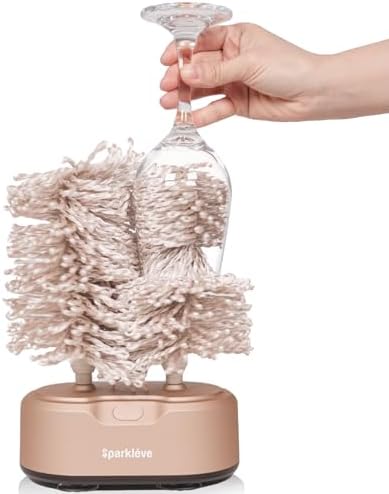

Three different owners are reading this page right now, and they need three different routines.
Kitchen bakeware and cookware
- Let the dish cool to room temperature before washing it — never move a hot dish straight to cold water or a cold countertop.
- Fill the sink or the dish itself with warm water and a small amount of mild dish soap, then let it soak for 5 to 10 minutes if there’s baked-on residue.
- Scrub gently with a soft sponge, working in circles rather than pressing hard in one spot.
- Rinse thoroughly under warm water until no soap film remains.
- Dry immediately with a microfiber cloth rather than air-drying, which is the main cause of the cloudy water spots that build up over months of use.
Water bottles and drinkware
- Remove any silicone sleeve or rubber seal before washing, since grime collects underneath it.
- Rinse the bottle under warm water immediately after use to stop residue from drying onto the glass.
- Use a bottle brush with soft bristles to reach the base and any narrow neck, since a sponge alone can’t get into those spots.
- Wash with warm water and a few drops of mild dish soap, then rinse until the water runs clear.
- For lingering odors, soak the bottle and sleeve in a mix of white vinegar and warm water for a few minutes before the final rinse — see borosilicate water bottle care tips for sleeve-specific guidance.
Lab and scientific glassware
- Soak new glassware in acid water before first use to remove the mild alkaline residue left over from manufacturing.
- Wash with a lab-grade detergent such as Alconox rather than standard dish soap, since it’s formulated to lift chemical residue and grease without leaving a film.
- Use a soft-bristle brush with a plastic or wooden handle — never a wire or metal brush — to avoid introducing scratches that weaken the glass under heat and pressure.
- Rinse with distilled water rather than tap water, since tap water can leave mineral deposits that interfere with sensitive reactions.
- Inspect the glass by holding it up to a light source before autoclaving or heating it again. Small fractures or star-shaped cracks mean the piece should be retired, not reused.
Is Borosilicate Glass Dishwasher Safe?
Yes, in most cases. Borosilicate glass resists thermal shock, which means it can handle the heat of a dishwasher cycle and the cooling that follows without cracking.
Check the specific product’s instructions before assuming this applies to yours, since coatings, decorative finishes, and lids aren’t always dishwasher safe, even when the glass itself is.
When the dishwasher is fine
- Plain, uncoated borosilicate bakeware and drinkware without any decorative print or metallic trim generally go through a normal dishwasher cycle without issue.
- Lab glassware that’s been fully rinsed of chemical residue and doesn’t have ground-glass joints requiring extra care can typically go through a lab-grade washer.
- Bottles and dishes with a manufacturer’s label explicitly stating “dishwasher safe” have already been tested for repeated cycles.
When to hand-wash instead
- Anything with a printed design, decal, or metallic accent should be hand-washed, since dishwasher detergent and heat can fade or strip the decoration over repeated cycles.
- Glassware with silicone sleeves or rubber seals lasts longer with hand-washing, since dishwasher heat can degrade the silicone faster than normal use would.
- Lab glassware with ground-glass joints or fine calibration markings is safer when hand-washed, since the joints can shift slightly under dishwasher water pressure over time.
How to Remove Stains and Cloudiness From Borosilicate Glass
Cloudiness on borosilicate glass is almost always mineral buildup from hard water, not damage to the glass itself, and it responds well to a vinegar soak in most cases. A best glass cleaners for glassware roundup covers commercial options if you’d rather skip the DIY method.
Vinegar and baking soda method
- For general cloudiness, fill or soak the glass in a solution of equal parts white vinegar and warm water for 15 to 30 minutes.
- For localized stains like tea or coffee rings, make a paste from baking soda and a small amount of water and apply it directly to the stain.
- Let the paste sit for 10 to 15 minutes, then scrub gently with a soft sponge in small circles.
- Rinse thoroughly with warm water until no vinegar smell or baking soda residue remains.
- Dry with a microfiber cloth and check the result in good light — repeat once if any haze remains before assuming it’s permanent.
Hard water stains vs. permanent etching
Not every cloudy patch responds to a vinegar soak, and knowing which one you’re dealing with saves a lot of wasted scrubbing.
| Factor | Hard water staining | Permanent etching |
|---|---|---|
| Cause | Mineral deposits sitting on the glass surface | Microscopic damage to the glass surface itself |
| Feel | Smooth to the touch | Slightly rough or textured under a fingernail |
| Vinegar soak result | Clears up or noticeably improves | No change, even after repeated soaks |
| Fix | Vinegar and baking soda, as above | None — etching is permanent; replacement is the only real fix |
The Real Thermal Shock Threshold (Not Just “Avoid Extreme Temperatures”)
Borosilicate glass tolerates a genuinely bigger temperature swing than ordinary glass before it cracks, and the reason comes down to a specific physical property most cleaning guides never mention.
Why borosilicate resists thermal shock better than regular glass
Borosilicate’s coefficient of thermal expansion sits around 3.3×10⁻⁶ per °C, compared to roughly 9×10⁻⁶ per °C for standard soda-lime glass — the type used in most drinking glasses and windows.
That’s the actual difference between borosilicate and soda-lime glass: borosilicate expands and contracts about a third as much as ordinary glass when the temperature changes, which is why it can go from a hot oven to room-temperature air without the internal stress that shatters regular glass under the same jump.
The temperature gap that actually causes cracking
| Situation | Risk level | Why |
|---|---|---|
| Rinse a warm dish under warm tap water | Low | Small temperature gap, gradual transition |
| Moving a hot dish from oven to a room-temperature counter | Low to moderate | Air cools more gradually than liquid does |
| Pouring boiling water into a cold glass | Moderate to high | Rapid, uneven heating creates internal stress |
| Plunging a hot dish directly into cold water or ice | High | Extreme, near-instant temperature gap on one side of the glass |
| Sustained use above 240°C (464°F) | High | Exceeds the temperature range most borosilicate cookware is rated for, even briefly |
What You Should Never Use on Borosilicate Glass
Most of the damage to borosilicate glass over its lifetime comes from a short list of specific chemicals and tools, not from ordinary use. Naming them matters more than a general warning to “avoid harsh cleaners.”
Chemicals to avoid
| Chemical | Why it’s harmful | Use instead |
|---|---|---|
| Hydrofluoric acid | Dissolves the silica structure of the glass directly, etching it permanently | Alconox or a mild lab detergent |
| Strong alkali cleaners (including lye-based oven cleaners) | Attacks the glass surface and can strip any protective coating | Mild dish soap or a dedicated glass cleaner |
| Chlorine bleach, used routinely | Leaves a residue that can off-gas or discolor when the glass is next heated | Vinegar and baking soda for stains |
| Undiluted strong acids or alkalis of any kind | Accelerate microscopic surface damage that compounds over repeated exposure | Manufacturer-recommended detergents at the stated dilution |
Tools and techniques to avoid
- Steel wool and other metal scouring pads scratch the surface, and those scratches become the exact spots where cracks start under heat or pressure later on.
- Abrasive powders marketed for tough kitchen stains are too rough for borosilicate and will dull its clarity over repeated use.
- Bumping the glass against a metal sink or faucet during washing can create small chips or star-fractures that aren’t visible until the glass is held up to light.
- Paper towels leave lint behind and can carry small abrasive fibers, so a microfiber cloth is the better drying choice, even though it takes an extra minute to grab.
Not Sure Which Cleaning Method Fits Your Glass?
Match your piece to one of the three routines above before reaching for anything beyond mild soap. A lab detergent on a baking dish is overkill, and dish soap alone won’t fully clean lab glassware that carries chemical residue.
Frequently Asked Questions
Is borosilicate glass dishwasher safe?
Yes, for plain uncoated pieces without decorative finishes or attached silicone parts. Check the manufacturer’s label first, since coatings and seals don’t always survive repeated dishwasher cycles even when the glass itself does. When in doubt, hand-wash.
Can I clean a glass bong or pipe the same way as borosilicate kitchenware?
No, that’s a different cleaning process built around dissolving resin, typically using isopropyl alcohol and coarse salt rather than dish soap. See how to clean a glass bong or pipe for that specific method. The glass material is the same; the residue and the right solvent for it aren’t.
How do you clean borosilicate glass without leaving streaks?
Dry it immediately after rinsing with a microfiber cloth instead of letting it air-dry. Air-drying is what causes most streaking and water spots, since mineral-laden water evaporates slowly and leaves deposits behind. A quick wipe right after the final rinse solves this in most cases.
Can you use bleach on borosilicate glass?
Occasionally, yes, but not as a routine cleaner. Diluted bleach can disinfect glass that’s been exposed to bacteria, but repeated use leaves a residue that can discolor or off-gas once the glass is heated again.
Rinse thoroughly and reserve it for occasional sanitizing rather than everyday washing.
Does borosilicate glass scratch easily?
Not under normal use, but it isn’t scratch-proof. Steel wool, metal utensils, and abrasive powders can all leave marks that weaken the glass over time, even if the scratch itself looks minor. Soft sponges and brushes keep the surface intact indefinitely.
Why does borosilicate glass get cloudy over time?
Mineral deposits from hard water build up on the surface faster than most people notice, especially on pieces that air-dry instead of getting toweled off.
A vinegar soak clears this up in the vast majority of cases. If a vinegar soak doesn’t change anything, the glass may have actual etching, which is permanent.
How is cleaning borosilicate glass different from cleaning regular glass?
The cleaning steps are nearly identical, but the safety margin is bigger. Borosilicate’s lower coefficient of thermal expansion means it tolerates hotter water, faster temperature changes, and dishwasher cycles that would risk cracking ordinary soda-lime glass.
The chemicals to avoid are hydrofluoric acid, strong alkalis, and bleach residue. Apply to both, but borosilicate is more forgiving of everything else.
How often should lab borosilicate glassware be sterilized?
Between uses, handling different samples or reagents, at a minimum, and always before autoclaving or returning glassware to general lab storage.
Frequency beyond that depends on the specific protocol and what the glassware was exposed to. Check your lab’s standard operating procedure rather than relying on a fixed schedule.
About the Author & Reviewer
Sarah Emirone, Author
Sarah researches and writes SafeKitchn’s dinnerware and kitchenware guides, with a focus on material safety, lead content, and manufacturer specifications. She cross-references product data sheets, safety certifications, and regulatory filings (including FDA and Prop 65 records) before publishing, and updates articles when new information becomes available.
James Daniels, Reviewer
James reviews SafeKitchn’s material safety content for scientific accuracy. He holds a B.Sc in inorganic chemistry and works as a materials researcher, with particular focus on the composition and safety behavior of glass, ceramic, and metal used in kitchenware.