

The shift away from single-use plastic in food service has been building for years, and food serving and cornware biodegradables sit right at the center of that change.
Cornware products are made from corn-based bioplastics that decompose naturally, offering a practical alternative to petroleum-based disposable tableware.
Restaurants, catering companies, and eco-conscious households are increasingly turning to these materials to reduce landfill waste and plastic pollution without sacrificing functionality.
This article covers what cornware is, how it’s made, the types of products available, and what to consider when adopting it for food service, whether for a single event or ongoing everyday use.
Written by Sarah Emirone | Reviewed by James Daniels, B.Sc, Inorganic Chemist & Materials Researcher | Updated September 2026 | See How We Test | Filed under: Material Safety & Lead Testing
What Is Cornware?
Definition of Cornware
Cornware refers to food-serving products, such as plates, bowls, cups, containers, and cutlery made from corn-based biodegradable materials.
Unlike conventional plastic disposables that persist in landfills for centuries, cornware biodegrades naturally under the right conditions, breaking down into organic matter that doesn’t leave lasting environmental damage.

The United Nations Environment Programme has consistently highlighted biodegradable tableware as part of the solution to global plastic pollution.
Cornware sits in this category as one of the most widely produced and commercially available biodegradable food-serving options, used across industries from fast food packaging to high-end catering events.
Corn-Based Bioplastic Materials
The primary material in cornware is polylactic acid, or PLA, a bioplastic that NatureWorks, one of the leading manufacturers in the field, forms from plant-based sources, primarily corn starch.
PLA is produced by fermenting the sugars extracted from corn into lactic acid, which is then polymerized into a plastic-like resin.
The result is a material that looks and performs similarly to conventional plastic in many food service applications but comes from a renewable agricultural source rather than petroleum.
NatureWorks’ Ingeo biopolymer is the most recognized PLA brand in commercial production, and it forms the base material for a wide range of cornware products sold globally.
How Cornware Is Produced
Production begins with corn starch, an agricultural byproduct produced as a natural output of corn processing. The starch is wet-milled to extract glucose, which is fermented to produce lactic acid, then converted into PLA pellets.
Those pellets are melted and shaped into food containers, plates, bowls, cups, and utensils using standard industrial molding equipment.
The manufacturing process itself is less energy-intensive than petroleum-based plastic production. Since corn is a renewable resource, the raw material supply can be replenished through normal agricultural cycles.
The finished products can be certified compostable if they meet the standards set by organizations like the Biodegradable Products Institute.
Types of Cornware Products for Food Serving
Cornware Plates and Bowls
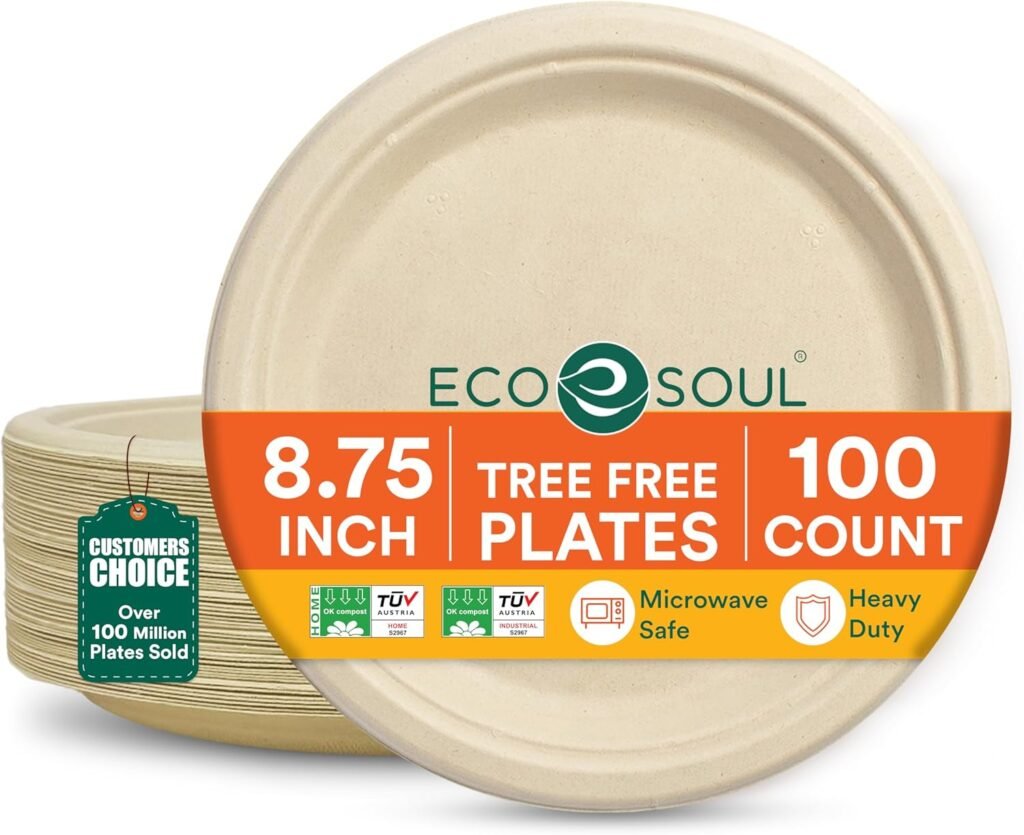
Cornware serving plates and disposable bowls are among the most commonly used biodegradable alternatives in food service.
Eco-Products and World Centric are two well-known suppliers that produce PLA-based plates and bowls designed to hold food securely during service without warping or leaking.
These products handle cold and room-temperature foods reliably and are widely used at events, in cafeterias, and in restaurants, transitioning away from conventional plastic disposables.
The Biodegradable Products Institute certifies compostable plates and bowls that meet ASTM composting standards, a useful marker for buyers wanting to confirm genuine environmental credentials rather than greenwashing claims.
Cornware Food Containers
Takeaway food containers are one of the highest-volume categories in food service packaging, and the shift toward sustainable packaging has pushed cornware food containers into mainstream use.
BioPak is a leading supplier of compostable takeaway packaging, producing PLA-lined containers that store food reliably for delivery and takeout service.
Starbucks has incorporated compostable restaurant packaging into parts of its operations as part of broader sustainability commitments.
These containers are designed to handle the same practical demands as their plastic equivalents: grease resistance, structural integrity, and secure sealing — while offering biodegradability at the end of life when composted correctly.
Cornware Cups and Utensils
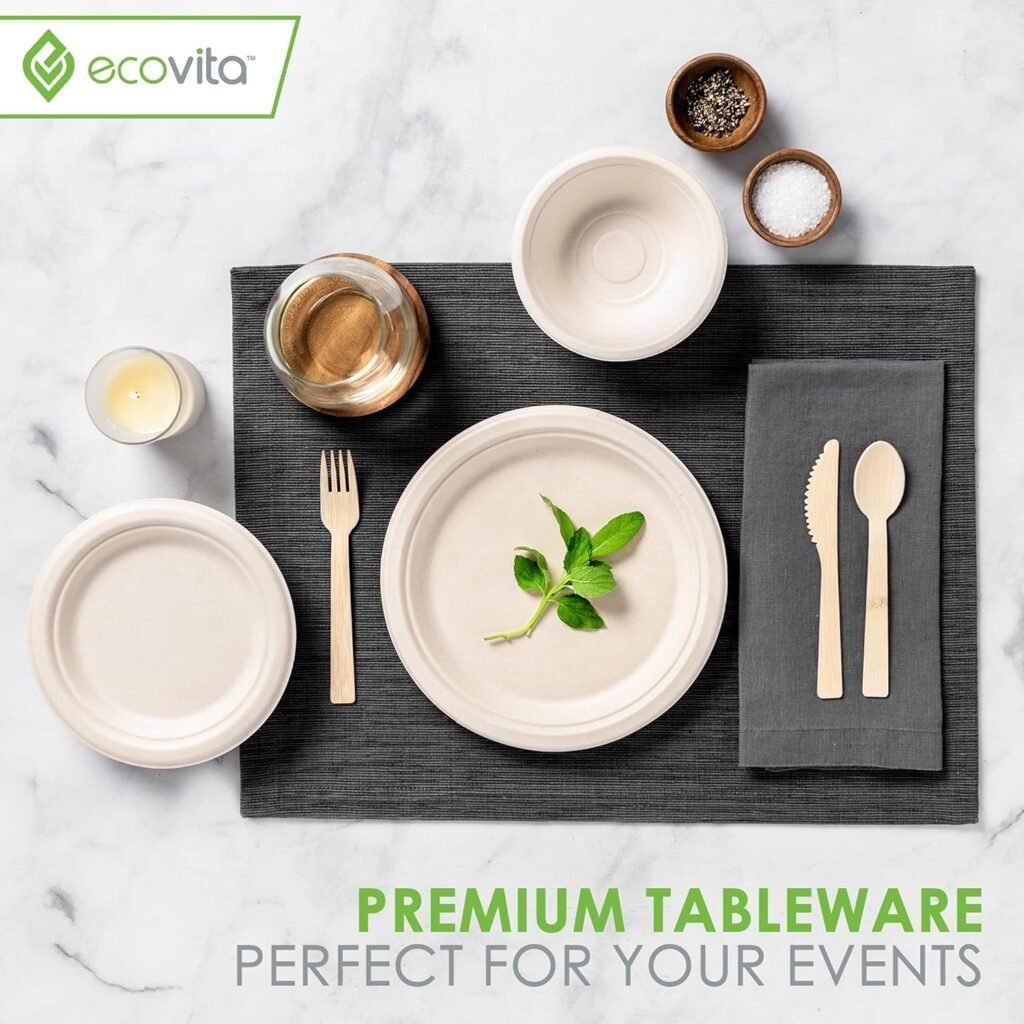
Compostable cutlery forks, spoons, and knives made from PLA are one of the most direct replacements for conventional plastic utensils in food service.
World Centric produces a widely used range of compostable cutlery that decomposes under industrial composting conditions. Eco-Products also offers disposable forks and cups across a range of PLA-based formats suitable for everything from office catering to outdoor events.
PLA cups handle cold beverages well, though they have temperature limits for hot liquids, a practical consideration for coffee service.
These single-use items serve food across the full meal cycle and represent the most accessible entry point for food businesses beginning to transition away from petroleum-based plastics.
Benefits of Using Cornware for Food Serving
Biodegradability and Compostability
The primary environmental advantage of cornware is that it decomposes naturally rather than persisting in landfills for hundreds of years.
Under industrial composting conditions, the kind managed by EPA-registered composting facilities, PLA breaks down into water, carbon dioxide, and organic matter within 90 days.
The EPA classifies composting as a preferred waste management approach because it converts organic waste back into material that decomposes waste into usable fertilizer rather than landfill volume.
Products certified by the Biodegradable Products Institute have been independently tested to confirm they compost fully and don’t leave toxic residues, which distinguishes genuine compostable cornware from products that merely claim environmental benefits without meeting measurable standards.
Reduced Environmental Impact
Plastic pollution from disposable food service items is a documented global problem. Greenpeace has repeatedly highlighted how single-use plastics pollute oceans and accumulate in marine ecosystems at damaging rates.
Switching to cornware reduces the volume of petroleum-based plastic entering waste streams.
It also reduces the carbon footprint associated with food service packaging, since PLA production generates fewer greenhouse gas emissions than conventional plastic manufacturing.
The IPCC’s work on measuring emissions from materials production supports the case for bioplastics as a lower-impact alternative.
Waste reduction at the product level, replacing plastic with compostable materials, is a practical step businesses can take without waiting for infrastructure-level policy changes.
Renewable Raw Materials
One of the structural advantages of cornware over petroleum-based plastics is that its raw material replenishes supply through natural agricultural cycles.
Corn is one of the most abundantly grown crops globally, and its starch is an agricultural byproduct of existing food production systems.
The United Nations has consistently promoted renewable resources as a foundation for environmental sustainability because they don’t deplete finite fossil fuel reserves the way petroleum-based materials do.
The Ellen MacArthur Foundation’s work on circular economy principles also supports plant-based materials as part of a resource model that reuses resources rather than extracting and discarding them.
Cornware fits this model more naturally than conventional plastic ever could.
Safety and Practicality of Cornware
Food Safety Standards
Cornware products sold in commercial food service must meet food safety standards regulated by the FDA, which regulates safety for all food-contact materials in the United States.
PLA is FDA-approved for food contact use, and properly manufactured cornware does not leach harmful compounds into food under normal serving conditions.
The World Health Organization’s food hygiene guidelines emphasize that food-contact surfaces must prevent contamination throughout the food handling chain, a standard that cornware meets when it’s manufactured and used correctly.
Buyers should look for FDA compliance confirmation and Biodegradable Products Institute certification together, as both confirm a product is both food-safe and genuinely compostable.
Heat Resistance and Durability
PLA-based cornware handles cold and ambient-temperature food service well; salads, cold drinks, desserts, and most catered meal formats work without issue.
For hot food applications, the picture is more nuanced. Standard PLA begins to soften at around 60°C (140°F), which means it handles warm food but is not suited to very hot soups or beverages without modification.
Some manufacturers produce heat-resistant PLA formulations for hot-food applications, though these products are typically more expensive.
For temperature control in food safety terms, the FDA’s guidelines on preventing spoilage still apply to cornware containers that function as delivery vessels, not insulating storage, so hot food should be served promptly.
Limitations of Cornware
Cornware has real limitations worth understanding before committing to it at scale. The most significant is its composting requirement: PLA doesn’t break down meaningfully in home composting setups or standard landfills; it requires industrial composting conditions to decompose on the timescale its environmental benefits promise.
If a business switches to cornware but its waste goes to a landfill rather than a composting facility, the environmental benefit is largely lost. Storage conditions also matter; prolonged exposure to heat or humidity can cause PLA products to degrade before use.
And for applications involving high-temperature foods or extended holding times, standard cornware may not perform as reliably as conventional plastic or ceramic alternatives.
Applications of Cornware in Food Service
Restaurants and Cafes
The food service industry has been one of the fastest-adopting sectors for compostable products, driven partly by regulation and partly by consumer demand for sustainable dining.
Compass Group, one of the world’s largest food service companies, has integrated eco-dining products into its operations across multiple markets.
For restaurants, cornware makes most sense in takeaway and delivery formats where single-use packaging is unavoidable, and the environmental cost of conventional plastic is highest.
Starbucks has used compostable restaurant packaging in pilot programs as part of its stated sustainability commitments. For dine-in service, the case for cornware is weaker.
Reusable ceramic or glass dinnerware has a significantly lower environmental footprint over time than any disposable alternative, including cornware included.
Catering and Events
Event catering is one of the strongest use cases for cornware. Large gatherings, such as weddings, corporate events, festivals, and conferences, generate significant volumes of single-use tableware waste, and cornware provides a practical biodegradable alternative.
Compass Group and similar large-scale event catering operations have begun incorporating compostable tableware into their standard service offerings. For outdoor events where on-site composting is feasible, the full environmental benefit of cornware can be captured at scale.
Disposable food trays and compostable cutlery from World Centric and Eco-Products are designed specifically for high-volume catering formats, balancing structural reliability with the compostability that makes the switch from plastic genuinely meaningful.
Household Use
For eco-conscious households, cornware offers a biodegradable option for situations where disposable tableware makes practical sense, such as outdoor dining, large family gatherings, travel, and situations where washing up isn’t convenient.
Green consumerism around food packaging has grown steadily, with Greenpeace and similar organizations consistently advocating for plant-based alternatives to petroleum plastics in everyday consumer choices.
The main consideration for household use is the composting question: if your local area has access to industrial composting collection, cornware delivers on its environmental promise.
Without that infrastructure, home composting of PLA is slow and unreliable, which limits the real-world benefit of choosing cornware over conventional options for everyday household situations.
Cornware vs Traditional Plastic Tableware
Environmental Differences
The most fundamental difference between cornware and conventional plastic is what happens at the end of life. Standard petroleum-based plastic tableware takes between 400 and 1,000 years to decompose in a landfill.
Cornware, under industrial composting conditions, decomposes in roughly 90 days.
In practical terms, this means every piece of plastic disposable tableware produced today will outlast everyone currently alive, while properly composted cornware returns to organic matter within a single season.
Greenpeace’s documentation of plastic pollution in marine environments makes clear the scale of damage that plastic waste causes, a problem that biodegradable tableware directly addresses when paired with proper waste infrastructure.
Material Composition
Conventional disposable tableware is made from petroleum-derived polymers, such as polystyrene, polypropylene, and PET, with polystyrene being the most common.
These materials come from fossil fuel extraction and require energy-intensive refining and polymerization processes.
Cornware is made from PLA, which NatureWorks develops from plant-based materials using fermentation chemistry rather than petroleum refining. The result is a bioplastic that performs similarly to conventional plastic in many applications but carries a fundamentally different material origin.
For anyone interested in comparing how these material differences play out in durable, non-disposable tableware, a useful reference point is comparing Corningware to the Corelle dinnerware brand, which explores how material composition affects performance in long-term kitchen use.
Sustainability Considerations
Choosing cornware over plastic is a meaningful sustainability step, but it’s not a complete solution on its own.
The environmental benefit depends heavily on what happens after using compostable products that end up in landfills, which don’t deliver their promised biodegradation benefits.
True environmental sustainability requires the full loop: renewable raw materials, efficient production, and composting infrastructure that actually processes the waste.
The United Nations’ environmental sustainability framework emphasizes protecting the environment through systemic thinking rather than product-by-product swaps.
Cornware is a meaningful part of that system, but businesses and households adopting it should also engage with local composting infrastructure to ensure the full benefit is realized.
Choosing Cornware for Sustainable Food Serving
Checking Compostability Certifications
Not all products labeled “biodegradable” or “eco-friendly” meet the same standards. The Biodegradable Products Institute certifies compostable products that have been independently tested against ASTM D6400 (for plastics) or ASTM D6868 (for coatings on paper) standards.
These certifications confirm that a product will fully compost in an industrial facility within a defined timeframe without leaving toxic residues. When sourcing cornware for food service, look for the BPI certification mark as a minimum requirement.
Eco-certification from equivalent bodies in other markets, like European EN 13432 certification, serves the same verification function. A certification mark is the clearest signal that a product’s environmental claims are substantiated rather than marketing language.
Selecting the Right Cornware Products
Matching cornware products to their intended food service application is important. Cold foods, salads, pastries, and ambient-temperature dishes work well in standard PLA plates, bowls, and containers.
Hot soups, boiling liquids, and high-temperature food service require heat-resistant PLA formulations or alternative materials; standard cornware will deform.
BioPak and Eco-Products both publish product specifications that include temperature tolerance ranges, which makes it straightforward to select the right format for each application. For takeaway packaging specifically, consider grease resistance ratings.
PLA containers vary in how well they handle oily foods, and selecting the right specification prevents leakage issues during delivery.
Proper Disposal and Composting
The environmental value of cornware depends entirely on how it’s disposed of after use. PLA requires industrial composting facilities that maintain the temperature, moisture, and microbial conditions needed to break down bioplastics within the certified timeframe.
Home composting bins typically don’t reach the temperatures needed for PLA decomposition. The EPA recommends connecting with local waste management authorities to identify industrial composting collection services in your area.
Businesses using cornware at scale should establish a clear waste stream for compostable items, separate from general waste and recycling, to ensure the product reaches the right facility. Without that infrastructure in place, even certified compostable cornware will simply sit in a landfill.
Final Thoughts
Cornware biodegradable products offer a genuinely practical alternative to conventional plastic food-serving items, one that reduces plastic pollution, draws on renewable raw materials, and returns to organic matter when composted correctly.
The environmental case is strong, and the product range now covers everything from serving plates to takeaway food containers to compostable cutlery.
The key condition is composting infrastructure: the benefits only fully materialize when used cornware reaches an industrial composting facility.
For businesses and households ready to make that commitment, cornware represents a meaningful, functional shift toward more sustainable food service, one product category at a time.
About the Author & Reviewer
Sarah Emirone, Author
Sarah researches and writes SafeKitchn’s dinnerware and kitchenware guides, with a focus on material safety, lead content, and manufacturer specifications. She cross-references product data sheets, safety certifications, and regulatory filings (including FDA and Prop 65 records) before publishing, and updates articles when new information becomes available.
James Daniels, Reviewer
James reviews SafeKitchn’s material safety content for scientific accuracy. He holds a B.Sc in inorganic chemistry and works as a materials researcher, with particular focus on the composition and safety behavior of glass, ceramic, and metal used in kitchenware.