

A lot of buyers do not realize that Corelle makes more than one type of dinnerware.
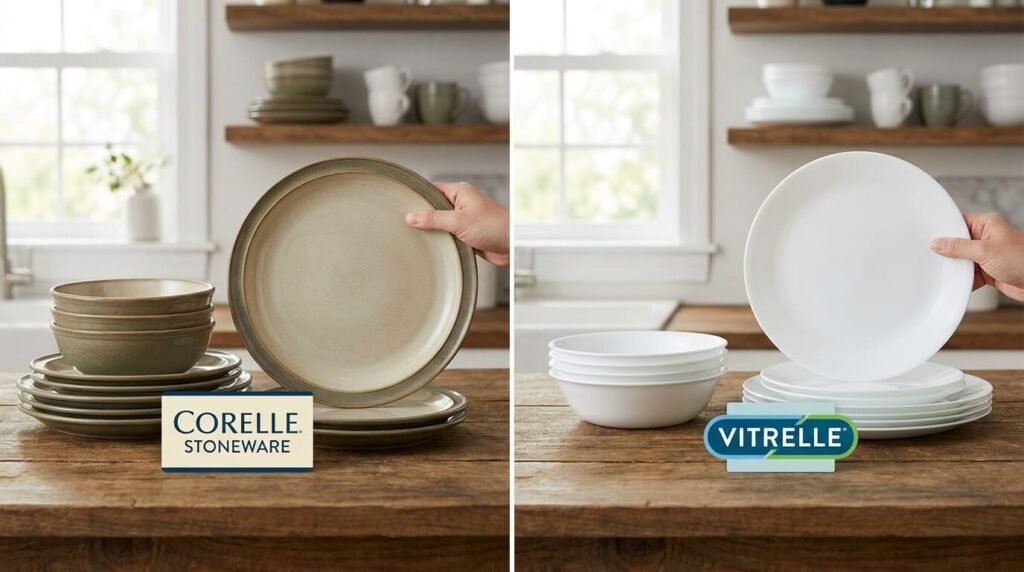
When you start comparing Corelle Stoneware vs Vitrelle, you quickly discover these are two genuinely different products with different materials, different weights, different strengths, and different use cases.
One is a lightweight laminated glass engineered for everyday practicality. The other is a ceramic-based stoneware built for aesthetic warmth and heat retention.
Choosing the wrong one for your household means living with a compromise every single day.
This guide breaks down exactly what sets these two Corelle material lines apart, covering weight, durability, oven safety, chip resistance, and design so you can pick the one that fits how your kitchen actually works.
Written by Sarah Emirone | Reviewed by James Daniels, B.Sc, Inorganic Chemist & Materials Researcher | Updated September 2026 | See How We Test | Filed under: Brand & Product Comparisons
Quick Comparison: Corelle Stoneware vs Vitrelle
| Feature | Vitrelle Glass | Corelle Stoneware |
|---|---|---|
| Material | Triple-layer laminated glass | High-fired ceramic clay |
| Weight | Very lightweight | Heavier, denser |
| Thickness | Thin and slim profile | Thicker construction |
| Chip Resistance | Excellent | Moderate |
| Break Behavior | Shatters into pieces when dropped hard | Chips or cracks under impact |
| Microwave Safe | Yes | Yes (check label) |
| Dishwasher Safe | Yes | Yes |
| Oven Safe | No | Yes (most collections) |
| Heat Retention | Low | High |
| Thermal Shock Resistance | Good | Moderate |
| Stackability | Excellent — thin and uniform | Moderate |
| Aesthetic Style | Minimalist, modern, clean | Rustic, earthy, textured |
| Best For | Everyday use, families, small kitchens, RVs | Formal dining, cozy settings, oven cooking |
| Lead-Free Certified | Yes | Yes |
| Price Range | Budget to mid-range | Mid-range |
What Is Corelle Vitrelle?
Overview of Vitrelle Glass Technology
Vitrelle is a proprietary laminated glass material originally developed by Corning Inc. It is constructed from three layers of glass fused under heat and pressure, a process that creates a material significantly stronger than standard glass of the same thickness.
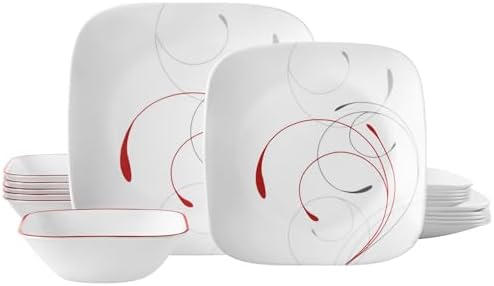
- 18-PIECE SET: Includes (6) 10-3/4-inch dinner plates, (6) 6-3/4-inch appetizer plates and (6) 18-oz soup/cereal bowls. T…
- LIGHT AND STRONG: Say goodbye to chips and cracks with Corelle’s triple-layer-strong glass plates and bowls. This durabl…
- LOW MAINTENANCE: This dinnerware set is designed to provide the best dining experience while requiring low maintenance. …
This triple-layer glass construction is what gives Vitrelle its distinctively thin profile, combined with genuine impact resistance.
No other mainstream dinnerware brand uses this exact technology, which is why Corelle plates made from Vitrelle sit in a category largely their own when it comes to lightweight glass dinnerware.
Main Features of Vitrelle Dinnerware
Vitrelle dinnerware stands out for a specific set of practical qualities that make it a household staple:
- Lightweight design: Noticeably lighter than ceramic dishes of comparable size
- Thin profile: Takes up minimal cabinet space and stacks efficiently
- Stackability: Uniform shape allows plates and bowls to nest tightly — ideal for compact storage
- Chip-resistant dinnerware: The laminated glass structure distributes impact well, reducing edge damage under daily use
- Microwave-safe and dishwasher-safe: Handles the full range of modern kitchen demands without special handling
Best Uses for Vitrelle Dinnerware
Vitrelle is best suited for households where practicality leads. For everyday tableware in busy family kitchens, it handles the volume of daily use without demanding careful treatment.
In small kitchens and apartment setups, its stackability and slim profile make storage genuinely easier. Families with children benefit from its lightweight handling and chip resistance.
For RV living and camping use, the combination of low weight and durability makes it one of the most sensible dinnerware choices available, easy to transport, easy to store, and built to survive the knocks of life on the road.
What Is Corelle Stoneware?
Overview of Stoneware Material
Corelle Stoneware is ceramic-based dinnerware made from dense fired clay — the same foundational material category as brands like Fiesta and Pfaltzgraff.
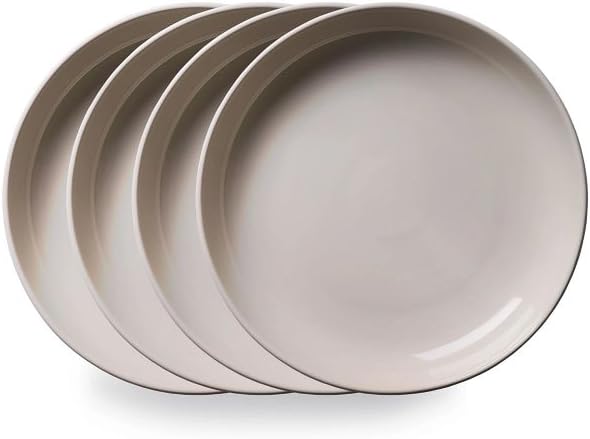
- Eat where you want: plates have higher rims and bowls are deeper for casual meals or on-the-go
- Superior craftsmanship: each piece is handcrafted with a natural finish
- One-bowl meals: perfect for pastas, your favorite poke, or your own designer salad
The clay is shaped and then fired at high temperatures in a kiln, which vitrifies the material and creates a durable, non-porous ceramic surface.
The result is heavier and thicker than Vitrelle glass, with a warm, substantial feel that many buyers associate with quality and permanence.
Corelle’s stoneware collections are finished with food-safe glaze and certified lead-free, meeting current FDA food contact standards.
Main Features of Corelle Stoneware
Corelle Stoneware brings a different set of qualities to the table compared to its Vitrelle counterpart:
- Heavier feel: The density of fired ceramic gives it a solid, premium presence in hand
- Rustic dinnerware appearance: Textured stoneware surfaces complement farmhouse and country-style kitchen aesthetics
- Heat retention: Stoneware holds warmth longer than glass, keeping food at serving temperature for more of the meal
- Oven-safe: Most Corelle Stoneware collections tolerate oven heat, allowing dishes to go from counter to oven and back
- Decorative range: Available in earthier colors and handcrafted-style patterns that Vitrelle does not replicate
Best Uses for Stoneware Dinnerware
Corelle Stoneware fits well in kitchens where aesthetics and cooking flexibility matter more than portability.
For formal dining setups or cozy table settings where the warmth of ceramic dinnerware contributes to the atmosphere, stoneware delivers the right visual and tactile experience.
Households that regularly move dishes from the oven to the table benefit from its oven-safe capability.
For buyers who simply prefer the heavier feel of ceramic dishes at everyday meals, the sense of substance that lightweight dinnerware does not provide, stoneware is the natural choice within the Corelle range.
Corelle Stoneware vs Vitrelle: Key Differences
Material Comparison
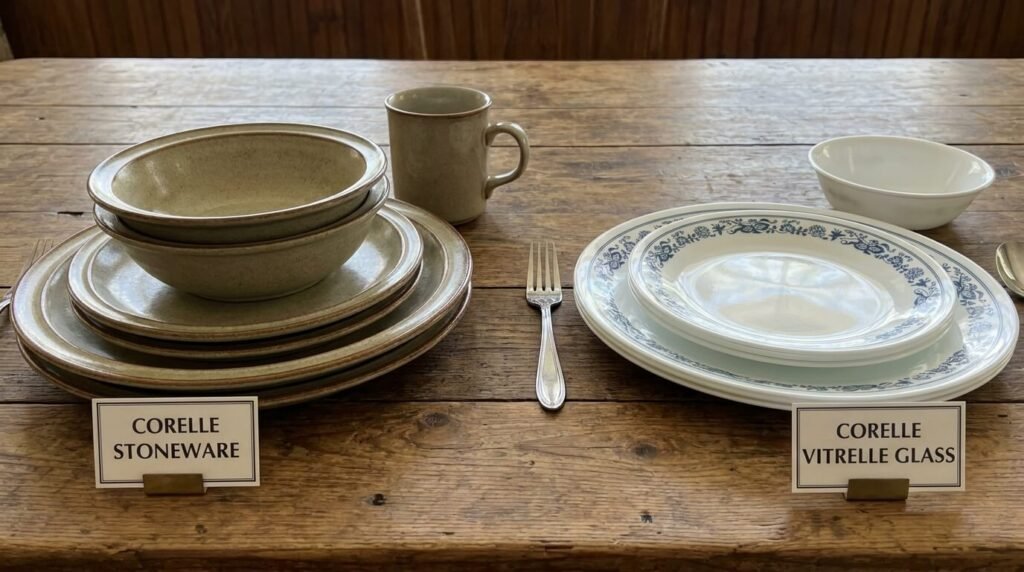
The core difference is material. Vitrelle is laminated glass with three bonded layers engineered for thinness and impact resistance.
Corelle Stoneware is fired ceramic clay, dense, opaque, and manufactured through a completely different industrial process.
These are not variations of the same material with minor adjustments; they are fundamentally different product categories that happen to share the Corelle brand.
This distinction drives every other difference between them, from weight and aesthetics to heat behavior and breakage patterns.
Weight and Thickness Differences
Vitrelle plates are significantly lighter and thinner than Corelle Stoneware.
A standard Vitrelle dinner plate weighs roughly half what a comparable stoneware plate does.
This difference is immediately noticeable when handling either product and has practical implications for storage, daily handling, and portability.
Stoneware’s thickness also makes it bulkier to stack, requiring more cabinet space per plate.
For households managing limited storage or prioritizing lightweight handling, particularly for senior-friendly dinnerware or families with young children, this weight gap is a meaningful factor.
Durability and Break Resistance
Both materials are durable, but they fail differently. Vitrelle’s triple-layer glass construction resists impact well under normal use, but when it does break under significant force, it tends to shatter into multiple pieces.
Corelle Stoneware, being ceramic, typically chips or cracks under impact rather than shattering completely.
Neither failure mode is ideal, but chip-resistant plates from the stoneware range may hold up better under certain kinds of rough daily handling, like being stacked heavily or knocked against hard surfaces, while Vitrelle better resists the kind of drop-and-bounce scenarios common in family kitchens.
Chip and Scratch Resistance
Vitrelle has the stronger chip resistance of the two. The laminated glass structure distributes edge impact more effectively than ceramic, making Corelle plates from the Vitrelle line genuinely resistant to the kind of rim chipping that affects standard ceramic dinnerware over time.
Stoneware is more prone to chipping at the edges with repeated hard contact.
On scratch resistance, stoneware’s glazed ceramic surface holds up reasonably well, but both materials can show surface marks over the years of heavy use with metal cutlery. Neither is immune, but Vitrelle edges ahead on chip resistance specifically.
Heat Retention Comparison
This is where Corelle Stoneware has a clear advantage. Ceramic dinnerware retains heat significantly better than glass stoneware, which keeps food warmer longer after serving, which matters during longer meals or when dishes sit on the table before everyone is seated.
Vitrelle glass, being thinner and less thermally massive, cools food more quickly.
For buyers who prioritize keeping meals at serving temperature, stoneware’s heat retention is a genuine practical advantage that glass-based alternatives like Vitrelle cannot match by material nature.
Which Is Better for Everyday Use?
Best for Families and Kids
Vitrelle wins here. Its lightweight design makes it easier for children to handle independently, its chip-resistant construction survives the drops and knocks of family dining better than stoneware, and its dishwasher-safe performance holds up to the volume of a busy household.
For family-friendly dinnerware that keeps up with the pace of daily life without requiring careful treatment, Vitrelle is the more practical choice for most households with children.
Best for Small Kitchens and Storage
Again, Vitrelle is the stronger option. Its thin, uniform profile stacks efficiently, making it ideal as space-saving dinnerware for apartment kitchens, dorm rooms, and RV setups.
Stoneware’s thicker construction takes up meaningfully more cabinet space per piece, which becomes a real daily inconvenience in compact living situations.
For anyone managing limited kitchen storage, the stackability advantage of Vitrelle is difficult to overlook.
Best for Formal Dining Aesthetics
Corelle Stoneware takes this category. Its rustic dinnerware texture, earthy tones, and heavier visual presence communicate a warmth and intentionality that Vitrelle’s clean minimalist style does not.
For table settings that need to feel considered and atmospheric, dinner parties, holiday meals, cozy family dinners where presentation matters, stoneware provides the aesthetic weight that elevates the dining experience beyond pure practicality.
Best for Lightweight Handling
Vitrelle, without question. Its laminated glass construction produces dishes that are noticeably easier to carry, serve from, and manage during meals, particularly for senior-friendly dinnerware situations where plate weight genuinely affects daily comfort.
The difference between lifting a Vitrelle dinner plate and a stoneware equivalent is felt immediately, and for anyone managing arthritis, limited grip strength, or a simple preference for lighter everyday tableware, Vitrelle is the clear choice.
Best for Long-Term Durability
Both materials offer solid long-term durability with proper care, but Vitrelle holds a slight edge in overall resistance to edge damage and daily wear over the years of continuous use.
Stoneware lasts well, too, but its greater susceptibility to chipping means it shows wear more visibly over time.
For households where dishes get heavy daily use, run through the dishwasher constantly, and are stacked and handled frequently, Vitrelle tends to maintain its appearance longer.
Safety Comparison: Stoneware vs Vitrelle
Lead-Free and Food-Safe Standards
Both Vitrelle and Corelle Stoneware are certified lead-free dinnerware and manufactured to meet FDA food contact standards. Glass is inherently inert and does not interact chemically with food.
Corelle Stoneware uses a food-safe glaze on its ceramic surface, which is tested to ensure it does not leach harmful substances under normal use conditions.
Both product lines are non-toxic dinnerware options suitable for all household members, including children, when purchased from current production runs.
Microwave and Dishwasher Safety
Vitrelle is fully microwave-safe and dishwasher-safe across all standard collections.
Corelle Stoneware is also generally microwave-safe and dishwasher-safe, though individual collections may carry specific recommendations; always verify the label for the particular set being purchased.
Both handle repeated dishwasher-safe dinnerware cycles well under normal conditions. Neither should be used with abrasive cleaning products that could damage glaze or glass surfaces over time.
Oven Safety Differences
This is a clear point of difference. Most Corelle Stoneware collections are oven-safe, making them genuinely versatile for cooks who move dishes from the oven to the table.
Vitrelle is not oven-safe its laminated glass construction is not designed for the sustained dry heat of an oven environment.
For households that regularly bake or roast and want their serving dishes to double as baking vessels, stoneware is the only choice between the two Corelle material lines.
Thermal Shock Resistance
Vitrelle glass handles thermal shock reasonably well. The tempered glass construction tolerates moderate temperature transitions, like moving from a dishwasher to room temperature food service, without issue.
Stoneware has moderate thermal shock resistance but is more vulnerable to sudden temperature changes than tempered glass.
Pouring boiling liquid into a cold stoneware bowl or moving a cold dish into a hot oven too quickly can cause cracking.
Both materials perform best when temperature changes are gradual rather than abrupt.
Corelle Stoneware vs Vitrelle Durability Test
Resistance to Chipping
Vitrelle leads on chip resistance. The fused glass layers distribute impact forces more evenly across the dish surface, reducing the likelihood of rim damage during stacking, washing, and daily handling.
Corelle Stoneware’s ceramic edges are more vulnerable to chipping when plates knock together or strike hard surfaces.
Over years of daily use, Vitrelle plates typically show fewer visible edge chips than comparable stoneware pieces in the same kitchen.
Resistance to Cracking
Stoneware is generally more resistant to surface cracking under normal use conditions. Its dense ceramic construction absorbs minor impacts without the internal stress fractures that can sometimes develop in glass-based materials.
Vitrelle, despite its break-resistant dinnerware engineering, can develop hairline fractures under repeated impact stress over time.
Neither material cracks easily under normal household use; this distinction matters most in environments where dishes experience above-average mechanical stress.
Breakage Behavior Comparison
When Vitrelle breaks, it tends to shatter into multiple pieces, a characteristic of glass-based materials regardless of tempering.
When Corelle Stoneware breaks, it typically chips or fractures into fewer, larger pieces.
Neither breakage pattern is inherently safer, but households with small children may find stoneware’s breakage pattern slightly easier to manage cleanup-wise. In practice, both materials are durable enough that breakage under normal use is infrequent.
Which Material Lasts Longer?
In most household conditions, Vitrelle has a slight durability edge over stoneware for long-term everyday use. Its chip resistance keeps it looking newer longer, and its glass surface does not absorb stains or odors the way ceramic glazes can over time.
Stoneware can last equally long when treated carefully, but it requires more intentional handling to maintain its appearance.
For high-volume daily use households, Vitrelle typically maintains its condition better over a multi-year lifespan.
Design and Style Comparison
Vitrelle’s Minimalist Modern Style
Vitrelle collections lean into clean, simple aesthetics, predominantly white or lightly patterned surfaces with a glossy glass finish that suits minimalist tableware setups and modern kitchen design.
The thin profile and smooth surface give Corelle plates a contemporary, almost Scandinavian quality.
For kitchens built around neutral color palettes and clean lines, Vitrelle fits effortlessly without demanding design attention.
Stoneware’s Rustic and Textured Appearance
Corelle Stoneware occupies a visually warmer space. Its ceramic dinnerware texture, earthier color ranges, and slightly irregular surface qualities evoke a handcrafted aesthetic that suits farmhouse-style dinnerware settings and rustic kitchen décor.
For buyers who want their table setting to communicate warmth and personality rather than minimalist precision, stoneware’s visual character is a genuine asset.
Color and Pattern Availability
Stoneware offers a broader range of earthy tones, warm neutrals, and decorative patterns than standard Vitrelle collections.
Vitrelle’s design range spans classic white to printed patterns through the Corelle Boutique line, but the overall aesthetic stays cleaner and more restrained.
Buyers seeking colorful dinnerware or textured surface variety will find more options in the stoneware range.
Which Material Looks More Premium?
This depends on context. In a rustic or traditional dining setting, Corelle Stoneware looks more premium. Its weight, texture, and earthy tones communicate quality in that aesthetic language.
In a modern minimalist kitchen, Vitrelle’s clean lines and glass finish can read as more refined.
Neither material objectively outclasses the other on appearance; the answer depends entirely on the kitchen and dining style it is being matched to.
Pros and Cons of Corelle Stoneware
Main Advantages
- Heavier premium feel: Dense ceramic construction communicates quality and substance in hand
- Better heat retention: Keeps food warmer longer at the table compared to Vitrelle glass
- Oven-safe capability: Moves from oven to table, adding cooking and serving flexibility
- Rustic aesthetic appeal: Textured ceramic surfaces complement farmhouse and earthy dining styles
- Solid scratch resistance: Glazed ceramic surface handles metal cutlery contact reasonably well
Disadvantages of Corelle Stoneware
- Heavier weight: Significantly heavier than Vitrelle, which matters for children, seniors, and compact storage
- More prone to chipping: Ceramic edges chip more readily than Vitrelle’s laminated glass rims under impact
- Less stackable: Thicker construction takes up more cabinet space per piece
- Thermal shock vulnerability: Rapid temperature changes can cause cracking if care is not taken
Best Choice Based on Lifestyle
Best for Everyday Busy Households
Vitrelle is the stronger everyday tableware pick for high-volume family kitchens. It handles daily dishwasher cycles, resists chipping through repeated use, stacks efficiently, and stays lightweight enough for everyone at the table to manage comfortably.
For households where dishes are in constant rotation, Vitrelle’s practical profile reduces the small daily frictions that add up over time.
Best for Apartment and RV Living
Vitrelle again. Its space-saving dinnerware qualities thin profile, tight stackability, and low weight, make it the most sensible choice for compact living situations.
In an RV or small apartment kitchen where every inch of storage counts and weight matters during transport, Vitrelle is designed for exactly these conditions in a way that stoneware fundamentally is not.
Best for Elegant Dining Presentation
Corelle Stoneware wins for dining contexts where presentation and atmosphere take priority. Its weight, texture, and rustic dining experience contribute to a table setting that feels considered and warm.
For hosting dinners, holiday meals, or any occasion where the look and feel of the table matters as much as the food on it, stoneware’s aesthetic character delivers what Vitrelle cannot.
Best for Durability and Longevity
Vitrelle holds a slight edge for long-term durability under daily household conditions primarily because its chip resistance keeps pieces looking newer for longer.
Both materials are built to last, and with proper care, either can serve a household for many years.
For pure longevity under maximum daily use, Vitrelle’s resistance to visible wear gives it a marginal but real advantage.
Conclusion
Corelle Stoneware and Vitrelle serve different households well, and the comparison between them comes down to what you actually need from your dishes daily.
Vitrelle glass focuses on lightweight practicality. It is thin, stackable, chip-resistant, and built for the volume and speed of busy everyday dining.
Corelle Stoneware focuses on aesthetics and thermal performance, heavier and warmer in appearance, oven-safe, and better at keeping food at serving temperature. Neither is objectively superior; they are optimized for genuinely different priorities.
About the Author & Reviewer
Sarah Emirone, Author
Sarah researches and writes SafeKitchn’s dinnerware and kitchenware guides, with a focus on material safety, lead content, and manufacturer specifications. She cross-references product data sheets, safety certifications, and regulatory filings (including FDA and Prop 65 records) before publishing, and updates articles when new information becomes available.
James Daniels, Reviewer
James reviews SafeKitchn’s material safety content for scientific accuracy. He holds a B.Sc in inorganic chemistry and works as a materials researcher, with particular focus on the composition and safety behavior of glass, ceramic, and metal used in kitchenware.