

If you’ve ever stood in a home goods aisle or browsed online and wondered whether that beautiful stemware is actually crystal or just well-made glass, you’re not alone.
The question is, is Mikasa crystal or glass? comes up more than you’d think, especially as interest in luxury drinkware and elevated dining aesthetics continues to grow.
Mikasa has built a strong reputation for elegant, affordable tableware, and its collections blur the line between everyday glassware and fine crystalware in a way that genuinely confuses shoppers.
The honest answer is that Mikasa manufactures both. Depending on the collection and product line, you could be holding crystal stemware or high-quality standard glass, and knowing the difference matters.
Written by Sarah Emirone | Reviewed by James Daniels, B.Sc, Inorganic Chemist & Materials Researcher | Updated September 2026 | See How We Test | Filed under: Buying, Care & Product Guides
What Is Mikasa?
Overview of the Mikasa Brand
Mikasa has been a trusted name in dinnerware and drinkware for decades. The brand markets itself at the intersection of accessible elegance and practical everyday use, making it a staple in homes, gift registries, and department stores like Macy’s.
Whether you’re shopping for a full dinnerware set or a pair of crystal wine glasses, Mikasa consistently delivers designs that feel premium without the ultra-luxury price tag.
Their glassware and crystalware lines are widely distributed both in-store and through online drinkware retail platforms, giving them a broad consumer reach across different buyer segments.
Types of Mikasa Products
Mikasa’s catalog covers a wide range of household beverage products and dining items. On the drinkware side, you’ll find crystal stemware, everyday tumblers, champagne flutes, whiskey glasses, martini glasses, and decorative glassware.
They also produce barware collections, crystal decanter sets, and coordinated beverage-serving pieces. Beyond drinkware, Mikasa manufactures dinnerware sets, serving pieces, and decorative table accessories.
This variety is part of what makes the brand so versatile; it serves both the casual home entertainer and the buyer looking for fine dining presentation quality.
Why Mikasa Became Popular
Mikasa’s popularity comes down to one thing it does especially well: affordable luxury positioning. Their designs look and feel expensive, which makes them a natural fit for wedding registry glassware and housewarming gifts.
The brand understood early on that most people want dining aesthetics that feel elevated without paying Waterford Crystal or Baccarat prices.
Elegant patterns, solid craftsmanship, and wide retail availability helped Mikasa build strong consumer product recognition over the years. For many households, Mikasa became the go-to brand for glassware that bridges the gap between casual and formal dining.
What Is the Difference Between Crystal and Glass?
What Is Standard Glass?
Standard glass — typically soda-lime glass — is made from silica sand, soda ash, and limestone melted together in a glass furnace.
It’s the most common type of glass used in everyday glassware: think tumblers, water glasses, and basic drinking vessels.
Soda-lime glass is durable, relatively lightweight, and easy to manufacture at scale through machine-made glass production. It’s practical, affordable, and completely fine for daily use.
What it doesn’t do as well is catch light or carry the visual weight and sparkle that crystal does, but that doesn’t mean it looks cheap. Modern manufacturing has come a long way.
What Is Crystal?
Crystal glass is standard glass enhanced with minerals — traditionally lead oxide — that dramatically increase its refractive index, giving it superior optical brilliance, weight, and clarity.
Traditional lead crystal contains a significant percentage of lead oxide, which produces the signature sparkle effect and prismatic effect you see when light passes through it.
Modern crystal, however, is increasingly lead-free crystal, where manufacturers replace lead with materials like barium oxide or zinc oxide to achieve similar results without the safety concerns.
Crystal is heavier, clearer, and more resonant than standard glass, and it’s categorized as a step above in both craftsmanship and material quality.
Visual and Functional Differences
Side by side, crystal and standard glass are easier to tell apart than you might expect. Crystal clarity is noticeably higher; it has a brilliance and depth that plain glass doesn’t replicate well.
Crystal is also heavier due to its mineral composition, and when you tap it lightly, it produces a clear ringing sound (the famous ring test).
Standard glass gives a dull thud. The sparkle effect is another giveaway: hold a crystal up to a light source, and it disperses light with a prismatic effect.
Standard glass simply transmits light without that visual drama. These differences make crystal the preferred choice for decorative glassware and fine dining settings.
Why Crystal Is Considered Premium
Crystal’s premium status isn’t just marketing; it comes from a combination of material quality, optical brilliance, and decorative craftsmanship.
Cut crystal is often hand-worked with intricate patterns through decorative engraving, which adds labor and artistry to the final product.
Crystal legacy brands like Waterford and Baccarat have spent generations reinforcing the association between crystal glass and luxury tableware, formal occasions, and collectible value.
The weight, the sparkle, and the craftsmanship all contribute to why crystalware is valued for its aesthetic and commands a higher price than standard everyday glassware.
Is Mikasa Crystal or Glass?
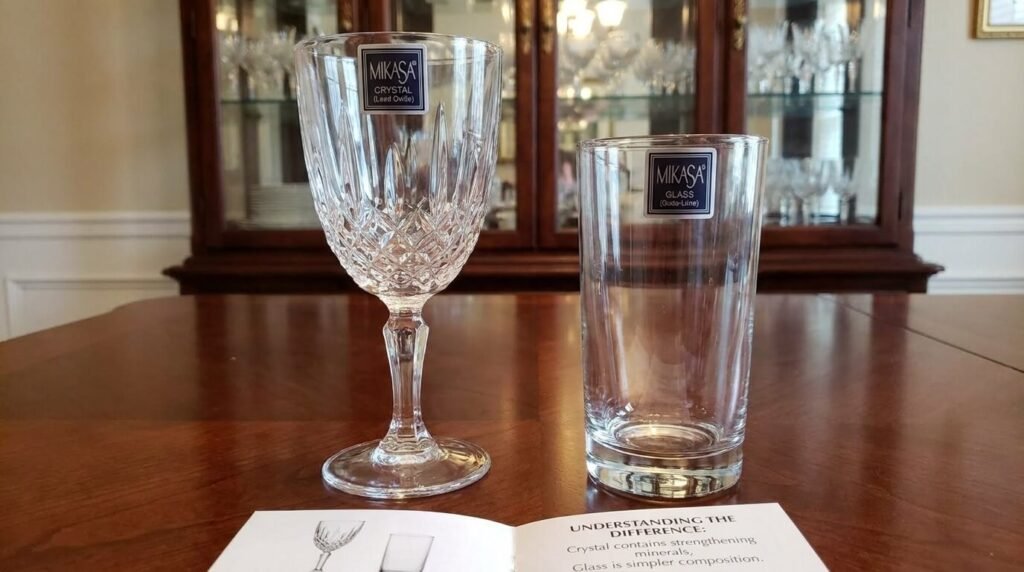
Mikasa makes both. Some products in their lineup are genuine crystal glass, while others are standard glass designed for everyday use. The specific material depends entirely on the collection and product line you’re looking at.
So if someone tells you all Mikasa products are crystal, that’s not accurate. And if someone says Mikasa only makes regular glass, that’s not right either.
The brand has always straddled both categories, which is a deliberate part of their product strategy to serve a wide range of consumers, from casual households to buyers seeking fine dining glassware.
Mikasa Crystal Collections
Mikasa does produce genuine crystal stemware across several of its collections.
Products labeled as crystal, including the Mikasa Park Lane line and various Mikasa Crystal Collection items, are made from real crystal glass, often lead-free crystal in more recent productions.
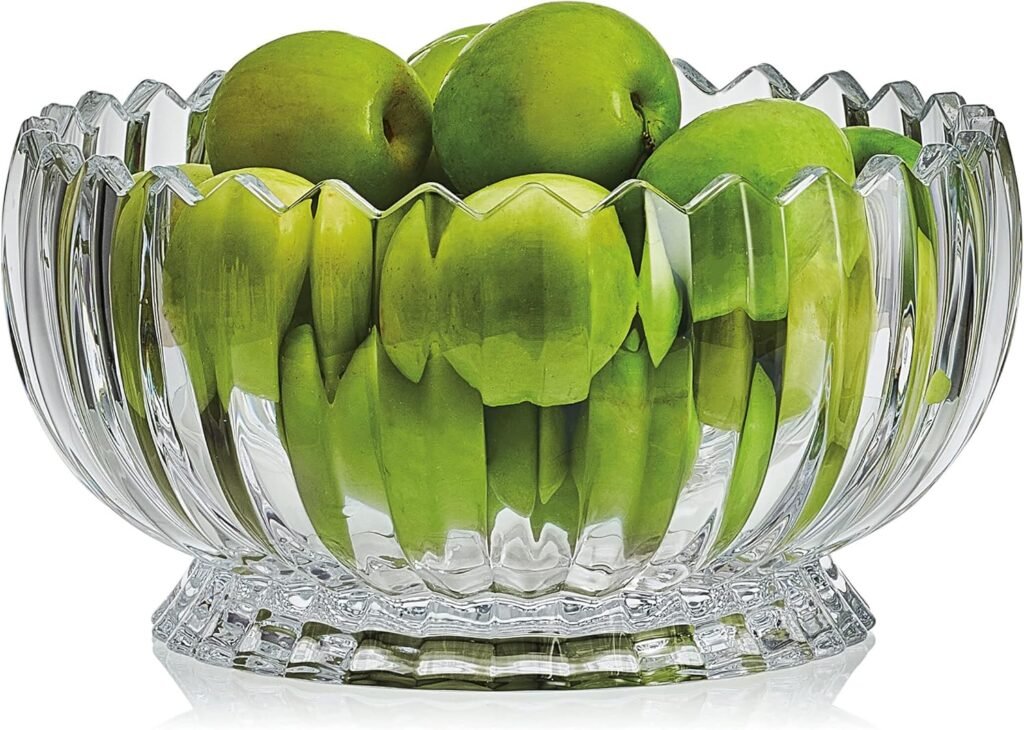
These include decorative crystal items, wine glasses, champagne flutes, goblets, and crystal decanter sets marketed for formal entertaining and gift giving.
Vintage Mikasa crystal pieces, especially older collectible crystal from earlier decades, may contain traditional lead crystal, making them sought after by crystal collectors for their optical quality and craftsmanship.
Mikasa Glass Collections
On the other side of Mikasa’s product range, you’ll find casual drinkware and everyday glassware made from standard glass.
These are the tumblers, stackable glasses, and functional table glasses that prioritize durability and convenience over decorative brilliance.
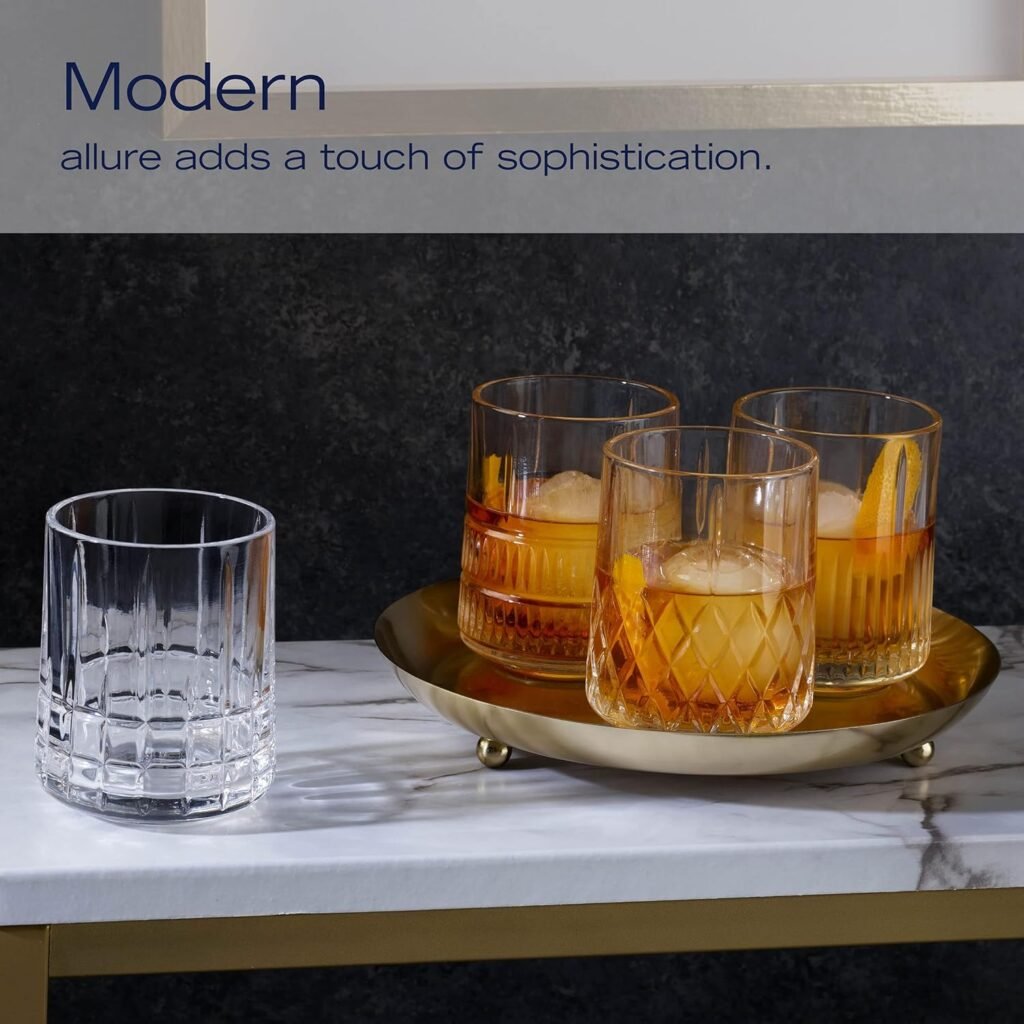
The Mikasa Cheers Collection is a popular decorative drinkware line that leans toward the glassware side rather than crystal. These products are designed for regular household beverage use and are typically more dishwasher-friendly.
They’re practical, well-made, and stylish — but they’re not crystal, and Mikasa doesn’t market them as such.
How to Identify Whether a Mikasa Product Is Crystal or Glass
The most reliable method is to read the product label or packaging carefully. Mikasa clearly identifies crystal products as crystal in their product descriptions and back stamps.
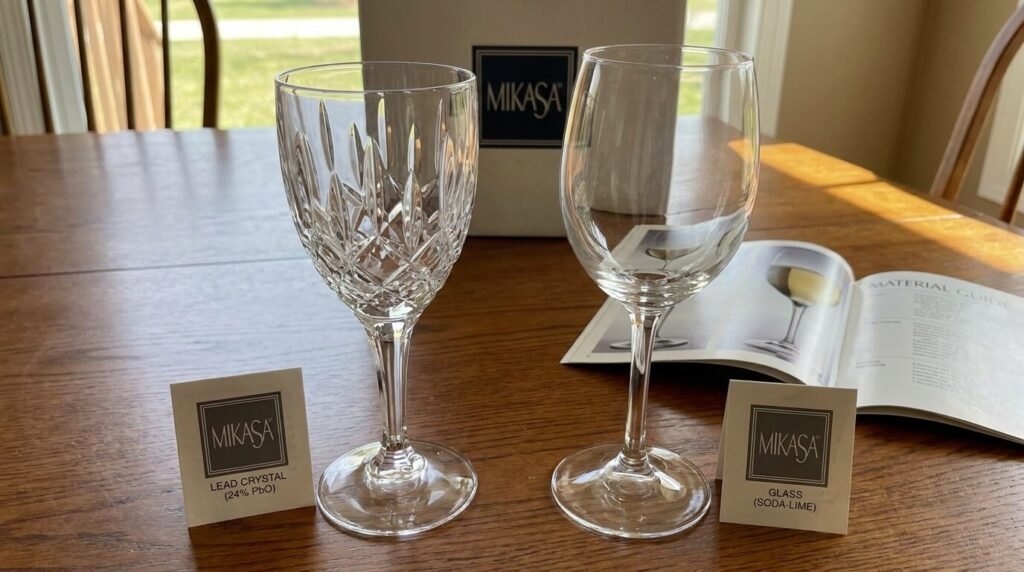
If the label says “crystal” or “lead-free crystal,” it’s the real thing. If it just says “glassware” with no crystal designation, you’re looking at standard glass.
You can also use the ring test — tap the rim lightly. Crystal produces a sustained ringing tone; glass gives a flat sound. Weight and crystal clarity are other indicators.
Genuine Mikasa crystal feels heavier and has noticeably more sparkle than their standard glass counterparts.
Does Mikasa Use Lead Crystal?
Traditional Lead Crystal vs Modern Crystal
Older Mikasa crystal products, particularly vintage pieces from earlier production runs, were made using traditional lead crystal, which contains lead oxide to enhance the refractive index and give the glass its characteristic weight and brilliance.
Lead crystal was the industry standard for decades and remains associated with the highest levels of optical quality in collectible crystalware.
However, Mikasa has largely shifted away from lead-based formulas in modern production, moving toward lead-free alternatives that meet current safety expectations without significantly compromising on visual appeal or quality.
Lead-Free Crystal Trends
The shift toward lead-free crystal reflects broader modern crystal technology trends across the drinkware industry.
Consumers are more aware of lead safety concerns than a generation ago, and manufacturers have responded accordingly.
Lead-free crystal uses alternative minerals like barium oxide or zinc oxide to achieve comparable sparkle and clarity.
Most buyers can’t distinguish the difference by eye. Mikasa’s current crystal stemware and decorative crystal items are predominantly lead-free, making them a safer choice for regular beverage use and food contact safety compliance with established consumer protection standards.
Food Safety and Consumer Concerns
Lead content in drinkware is a legitimate concern, particularly for products used frequently with acidic beverages like wine or juice, which can leach lead from the crystal over time.
The U.S. Food and Drug Administration regulates glassware safety standards, and FDA glassware standards around lead-free drinkware have pushed most major brands to reformulate.
For daily use, lead-free drinkware is the recommended choice. If you own vintage Mikasa crystal that may contain lead, the general guidance from consumer safety experts is to avoid using it as everyday drinkware, reserve it for display or occasional formal use instead.
How to Verify Crystal Composition
If you want to know whether a specific Mikasa piece is lead crystal or lead-free crystal, start with the product description on Mikasa’s website or the original packaging.
Modern Mikasa crystal is typically labeled as lead-free. For vintage pieces, crystal identification may require more work, checking backstamps, researching the specific pattern online, or consulting a crystal appraisal service.
Collector communities often have detailed records on older Mikasa crystal patterns like Park Lane. You can also contact Mikasa’s customer service directly, as they maintain records on material composition by collection and production era.
Mikasa Crystal vs Regular Glass Comparison
Appearance and Sparkle
When comparing Mikasa crystal to their standard glass products, the visual difference is the most immediate.
Mikasa crystal glass has a higher refractive index, which produces that distinctive sparkle effect and prismatic light dispersion that makes crystal stemware so striking on a table.
The glass transparency in standard Mikasa drinkware is still quite good — clean and clear — but it doesn’t carry the same optical brilliance. Under direct light, crystal glows; glass transmits.
If you’re setting a formal table or hosting guests, the difference is noticeable enough to matter aesthetically.
Durability and Scratch Resistance
Standard glass is generally more durable than crystal for everyday use. Because crystal glass is softer due to its mineral composition, it’s more vulnerable to scratching over time and requires more careful handling.
Tempered glass versions of Mikasa’s standard glassware are particularly resistant to breakage. Crystal fragility is a real consideration — lead-free crystal is somewhat more resilient than traditional lead crystal, but it still requires more care than everyday glass.
Glass durability gives standard Mikasa drinkware a practical edge for high-volume use or households with children.
Weight and Feel
One of the easiest ways to distinguish Mikasa crystal from standard glass in person is by weight comparison. Crystal is noticeably heavier because of the minerals added during crystal manufacturing.
This added weight gives crystal stemware a sense of substance and quality when held — it simply feels more premium in the hand. Standard Mikasa glassware is lighter and easier to handle for prolonged use, which some people prefer for casual drinkware.
Weight is a sensory cue most people associate with quality, which is a key part of why crystal glass registers as luxurious compared to standard glassware.
Everyday Use vs Formal Dining
Mikasa’s standard glass collections are built for everyday glassware scenarios, daily beverage use, casual dining, dishwasher convenience, and households where glasses get regular and frequent use.
Mikasa crystal, on the other hand, is positioned for fine dining presentation, entertaining, and special occasions. Crystal stemware elevates beverage service and makes a strong visual impression at a dinner party.
The two serve different functions, and Mikasa has deliberately designed products to satisfy both use cases rather than forcing buyers into one category — it’s one of the brand’s most practical strengths.
Price Differences
Price reflects material and positioning. Mikasa crystal products, especially crystal stemware, decanter sets, and decorative crystal items, are priced higher than their standard glassware equivalents.
Crystal manufacturing involves more refined materials, more precise production, and, in some cases, decorative engraving that adds to the cost.
Standard Mikasa glass is priced accessibly, which is central to the brand’s everyday appeal.
The price gap between the two isn’t extreme by luxury tableware standards, which is exactly the point. Mikasa offers crystal quality at a price that doesn’t require a special occasion to justify.
Is Mikasa Crystal High Quality?
Craftsmanship and Design Standards
Mikasa crystal holds up well against comparable brands in the mid-range luxury tableware segment. The craftsmanship reflects thoughtful design — clean lines, well-proportioned stems, and consistent crystal patterns that enhance both function and aesthetics.
While Mikasa isn’t positioned at the very top of the market alongside Waterford or Baccarat, it delivers reliably strong quality for the price.
Collectors and gift buyers consistently find Mikasa crystal to be a satisfying product, and the brand’s design standards have remained stable enough that both vintage and modern Mikasa crystal retain their visual appeal over time.
Durability for Everyday Use
Mikasa crystal, particularly the lead-free crystal lines, is more durable than many people expect. It’s not as fragile as fine antique crystal, and with proper care, it holds up well for regular entertaining use.
That said, it’s not designed to compete with the glass durability of standard everyday glassware. For households that want to use their crystal regularly rather than just display it, Mikasa is a practical choice.
It bridges the gap between purely decorative crystalware and fully functional drinkware better than most brands at a comparable price point in the market.
Dishwasher Safety Considerations
Most Mikasa standard glassware is fully dishwasher-safe, and the brand labels these products clearly.
For Mikasa crystal, guidance varies. Some lead-free crystal pieces are rated as dishwasher-safe glassware, but many, particularly older or more delicate crystal stemware, are best treated as handwashing crystal to preserve clarity, sparkle, and structural integrity.
Dishwasher heat and detergents can cause etching or cloudiness in the crystal over time. When in doubt, handwash your Mikasa crystal and reserve the dishwasher for the everyday glass collections where machine washing is fully supported.
Collectibility and Gift Appeal
Mikasa crystal has genuine collectible value, particularly older patterns from the brand’s earlier decades.
The giftware industry has long recognized Mikasa as a top-tier wedding registry glassware option because it offers real crystal quality at a price point that makes it a practical gift.
Vintage Mikasa crystal, especially discontinued patterns like Park Lane, attracts crystal collectors and can be found at estate sales and online auctions.
For new buyers, Mikasa crystal remains one of the strongest value propositions in the luxury tableware space: quality craftsmanship, recognizable brand, and broad collection appeal.
How to Identify Authentic Mikasa Crystal
Mikasa Markings and Labels
Authentic Mikasa crystal products are marked clearly. Most pieces carry a backstamp or etched mark on the base identifying the brand, the collection name, and often the material composition.
Look for the Mikasa name along with designations like “crystal,” “lead-free crystal,” or “fine crystal.” Packaging for genuine Mikasa crystal will include consumer product labeling that confirms material type.
If you’re buying secondhand or vintage pieces, the backstamp is your most reliable identifier. If there’s no marking at all, be cautious; legitimate Mikasa crystal is consistently and clearly labeled.
Signs of Genuine Crystal
Beyond markings, genuine crystal has physical characteristics you can test for. The ring test is the most well-known — tap the rim gently and listen for a clear, sustained tone.
True crystal glass resonates with sound resonance that standard glass simply doesn’t produce. Crystal clarity is another giveaway: hold the piece up to light and look for the brilliant, light-bending sparkle.
Weight comparison is also useful. Mikasa crystal should feel noticeably heavier than comparable-sized standard glass. Genuine crystal, particularly cut crystal, also has a sharpness and precision to its engraved decorative patterns.
Vintage vs Modern Mikasa Crystal
Vintage Mikasa crystal and modern Mikasa crystal differ mainly in composition and manufacturing technique.
Older pieces, especially those from the 1970s through the early 2000s, may contain lead crystal, giving them a denser feel and slightly different optical quality than modern lead-free versions.
Collectors often seek vintage Mikasa crystal for its traditional craftsmanship and discontinued patterns. Modern Mikasa crystal is primarily lead-free and tends to be slightly lighter.
Both are genuine crystals; the difference lies in the formula and era. Drinkware product evolution has moved the brand steadily toward safer, lead-free formulations across its crystal lines.
Avoiding Counterfeit Glassware
Counterfeit or misrepresented glassware is more common than buyers realize, especially in secondhand and online drinkware retail markets.
If a price seems too good for claimed authentic Mikasa crystal, trust that instinct. Always buy from reputable retailers or sellers with clear return policies.
When purchasing vintage Mikasa crystal at auction or estate sales, look for the original backstamp and cross-reference the pattern name with known Mikasa collections.
If a seller can’t confirm the pattern name or there’s no backstamp, have the piece assessed by a crystal appraisal professional before committing.
Conclusion
So, is Mikasa crystal or glass? The answer is both, and that’s actually one of the brand’s greatest strengths.
Mikasa offers genuine crystal stemware and decorative crystalware for buyers who want the sparkle, weight, and luxury tableware feel of real crystal, alongside practical everyday glassware that’s durable, stylish, and built for regular use.
The collection you choose determines the material, and Mikasa is transparent about labeling both. Whether you’re building a formal dining set, shopping for a wedding gift, or just looking for quality daily drinkware, understanding the distinction helps you make a smarter purchase.
And if you’re curious about where these products come from, it’s worth exploring whether Mikasa is manufactured in China. That context adds another useful layer to understanding the brand.
About the Author & Reviewer
Sarah Emirone, Author
Sarah researches and writes SafeKitchn’s dinnerware and kitchenware guides, with a focus on material safety, lead content, and manufacturer specifications. She cross-references product data sheets, safety certifications, and regulatory filings (including FDA and Prop 65 records) before publishing, and updates articles when new information becomes available.
James Daniels, Reviewer
James reviews SafeKitchn’s material safety content for scientific accuracy. He holds a B.Sc in inorganic chemistry and works as a materials researcher, with particular focus on the composition and safety behavior of glass, ceramic, and metal used in kitchenware.