

More people than ever are scrutinising what their kitchen products are made of, and for good reason. Chemicals like Bisphenol-A (BPA) have made headlines for leaching from plastic containers into food, raising real concerns about everyday dinnerware.
So, is Corelle dinnerware BPA free? It’s one of the most common questions health-conscious shoppers ask before investing in a new dinnerware set.
Corelle is one of the most recognisable tableware brands in the world, known for its lightweight construction and durability. Understanding what it’s made of — and what it isn’t made of — goes a long way in answering that question with confidence.
Written by Sarah Emirone | Reviewed by James Daniels, B.Sc, Inorganic Chemist & Materials Researcher | Updated September 2026 | See How We Test | Filed under: Material Safety & Lead Testing
What Are Corelle Dishes Made Of?
Overview of Corelle Dinnerware
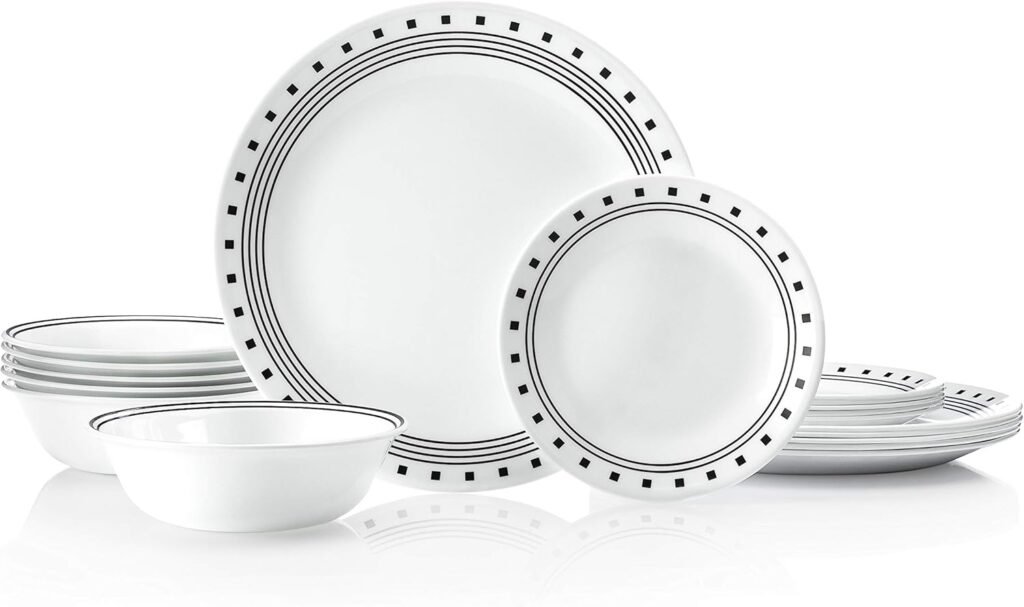
Corelle is a well-established American dinnerware brand that’s been in households since the 1970s. Its dishes — dinner plates, salad plates, soup bowls, cereal bowls, and mug sets — are designed for everyday dinnerware use.
The brand built its reputation on lightweight, stackable, easy-to-handle dishes that work just as well for a quiet breakfast as they do for a full family dinner. That combination of practicality and durability is what keeps Corelle popular across generations.
What Material Is Used in Corelle Dishes?
Corelle dishes are made from Vitrelle glass — a proprietary triple-layer glass construction developed by Corning. Three thin layers of glass are bonded together under heat and pressure, producing a material that’s stronger, thinner, and lighter than conventional ceramic or standard glass dinnerware.
This tempered glass structure is what gives Corelle its distinctive feel: solid in the hand, but noticeably lighter than most people expect from a glass-based product.
How Corelle Differs From Plastic Dinnerware
The key difference between Corelle and plastic dinnerware comes down to material composition.
Plastic dishes — especially older polycarbonate ones — are where BPA exposure typically originates, because BPA is used in the manufacturing of certain plastics and resins.
Glass, by contrast, doesn’t require BPA in its production at any stage. Corelle’s glass composition also gives it better chemical stability and heat resistance than most plastic alternatives, meaning it doesn’t degrade or react with food under normal use conditions.
Why Material Composition Matters for Food Safety
When a material touches food — especially hot food — its chemical makeup determines whether anything harmful migrates into what you’re eating. This is what food contact safety is about.
Porous or reactive materials can absorb food particles or release compounds over time. Vitrelle glass is non-reactive, meaning it holds its chemical integrity even with repeated use, heating, and washing.
That’s a meaningful advantage for anyone concerned about chemical leaching from everyday kitchenware.
What Is BPA and Why Are People Concerned About It?
Definition of BPA (Bisphenol A)
Bisphenol-A is an industrial chemical that has been used since the 1960s in the production of certain plastics and epoxy resins. It’s a key building block for polycarbonate plastic — a hard, clear material used widely in consumer products.
BPA helps give plastic its rigidity and heat resistance, which made it popular for years before its potential health effects came under serious scrutiny.
Which Products Commonly Contain BPA?
BPA shows up in a wider range of products than most people realise. Plastic food containers, water bottles, baby bottles, the lining inside metal food cans, thermal paper receipts, and some polycarbonate plastics used in kitchenware have all historically contained BPA.
It’s the plastic food containers and reusable bottles that tend to raise the most concern, since they come into direct, repeated contact with food and drinks — sometimes under heat.
Health Concerns Associated With BPA Exposure
The concern around BPA centres on its potential to act as an endocrine disruptor — meaning it can interfere with the body’s hormonal systems.
Studies have linked BPA exposure to concerns around reproductive health, brain development in children, cardiovascular function, and metabolic issues.
Consumer safety debates around BPA have been ongoing for decades, and while regulatory agencies continue reviewing the evidence, many consumers have already decided they’d rather avoid it altogether.
How BPA Can Enter Food or Drinks
Chemical leaching from BPA-containing products increases under certain conditions.
Heat is the biggest trigger — microwaving food in plastic containers or washing them repeatedly in a hot dishwasher accelerates the breakdown of the plastic, releasing BPA into whatever food or liquid it contacts.
Scratched or worn plastic surfaces also leach more readily than intact ones, which is why food safety guidance often recommends replacing scratched plastic dishes and containers.
Is Corelle Dinnerware BPA Free?
The Short Answer
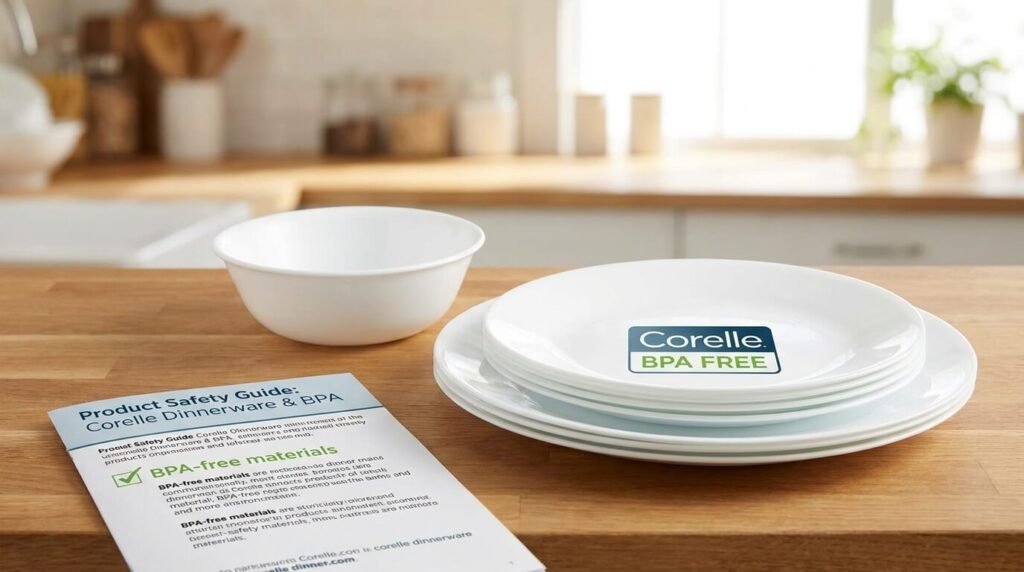
Yes — Corelle dishes are generally BPA-free. Because they’re made from Vitrelle glass rather than plastic, BPA simply isn’t part of their material composition. Glass doesn’t require Bisphenol-A at any stage of its manufacturing process, so the concern that applies to polycarbonate plastics doesn’t transfer to glass-based dinnerware like Corelle.
Why Corelle Dinnerware Does Not Typically Contain BPA
BPA is a plastic manufacturing chemical — it’s not used in glass production. Since Corelle’s core dinnerware pieces (plates, bowls, and mugs) are made entirely from Vitrelle glass, they have no plastic components that could introduce BPA into the product.
This glass-based composition is the primary reason Corelle is considered a safer, plastic-free dinnerware option for health-conscious households.
Does Corelle Officially State Their Products Are BPA Free?
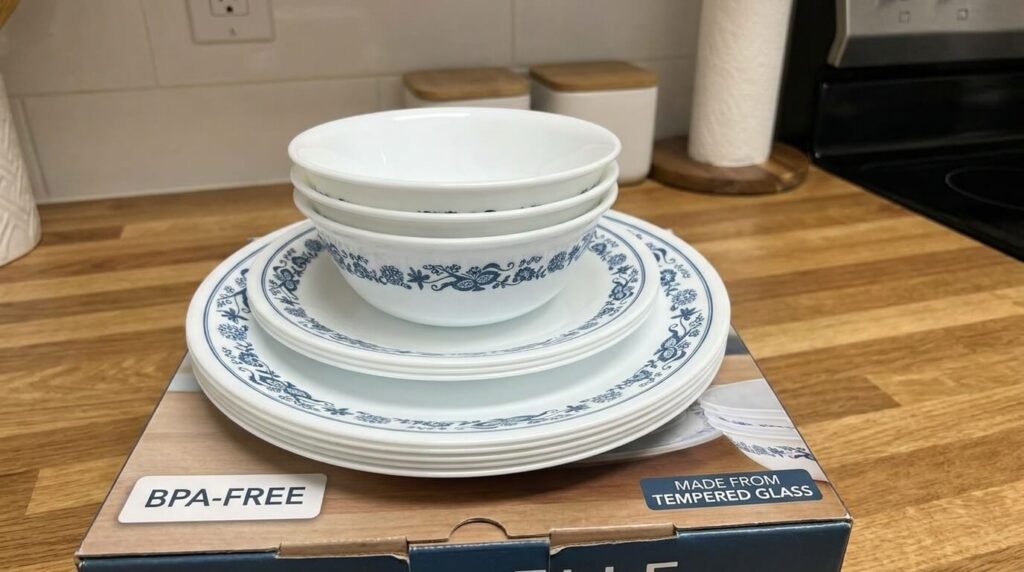
Corelle’s manufacturer, Corelle Brands, has confirmed that their glass dinnerware does not contain BPA. Product labelling and official communication from the brand reflect this position.
The dishes meet food contact safety standards required by regulatory bodies, including the FDA. For consumers who want manufacturer-level confirmation rather than just material-based reasoning, that official stance provides additional reassurance.
Are all Corelle products BPA-free?
This is where it gets slightly more complex. The glass dinnerware — plates, bowls, mugs — is BPA-free. However, some Corelle accessories, such as plastic storage lids or plastic-component sets, may contain different materials.
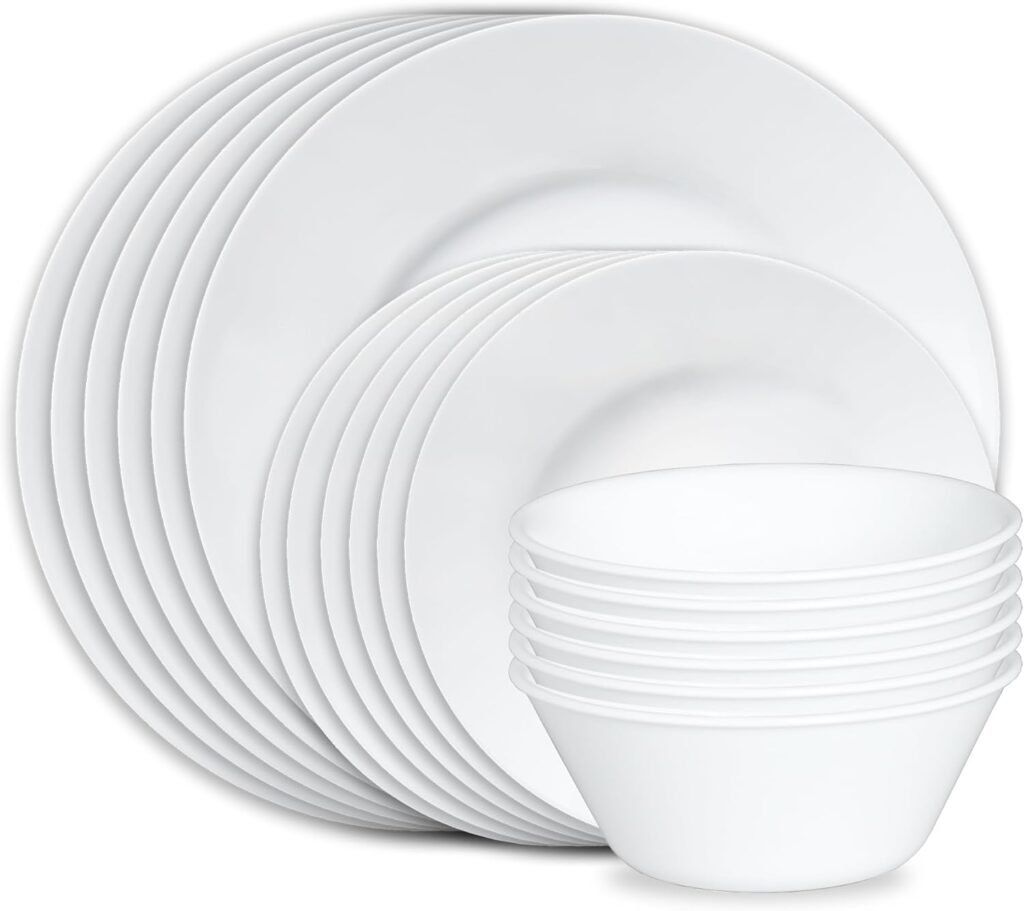
If you’re purchasing anything with a plastic lid or a plastic-bodied container under the Corelle brand name, check that product’s labelling specifically. The BPA-free status applies clearly and reliably to the glass dinnerware itself.
Is Corelle Dinnerware Safe for Everyday Use?
Is Corelle Microwave Safe?
Yes, Corelle dishes are microwave safe. You can heat food directly on a Corelle plate or in a Corelle bowl without concern.
The Vitrelle glass doesn’t absorb microwave energy the way some materials do, and it doesn’t release chemicals when heated, a key advantage over plastic dinnerware, where heat accelerates chemical leaching.
Is Corelle Oven Safe?
Corelle dishes are not designed for conventional oven use at high temperatures. While the glass handles standard food temperatures well, placing Corelle in a hot oven, particularly under a broiler, risks thermal shock.
Corelle works best for stovetop heating, microwave use, and serving. Keep it away from direct oven baking for the best results and longest product lifespan.
Can Corelle Release Chemicals When Heated?
Under normal use conditions, no. Vitrelle glass has strong chemical stability — it’s a non-reactive, non-porous surface that doesn’t break down or off-gas when heated within recommended temperature ranges.
Unlike plastic, which can degrade and release compounds like BPA with repeated heat exposure, glass maintains its integrity.
This makes Corelle a genuinely reliable choice for serving hot foods without the chemical leaching concern that plastic dinnerware carries.
Is Corelle Safe for Children and Families?
For daily family meal use, Corelle is a solid choice. It’s BPA-free, non-toxic, and made from food-safe material that doesn’t introduce harmful chemicals through normal food contact.
The lightweight design also makes handling easier for children compared to heavier ceramic alternatives. Families who’ve moved away from plastic dishes for health reasons frequently cite Corelle as one of their top glass-based replacements.
Corelle Dishes vs Plastic Dinnerware
BPA-Free Glass vs BPA-Free Plastic
Many plastic dishes are now marketed as BPA-free, but that label alone doesn’t tell the full story. BPA-free plastics often replace Bisphenol-A with related compounds like BPS or BPF, which have raised similar concerns in early research.
Glass-based dinnerware like Corelle sidesteps this substitution issue entirely — there’s no BPA, and no BPA replacement chemical either. For truly plastic-free kitchenware, glass remains the cleaner option.
Which Material Is Safer for Hot Foods?
Glass is a safer material for hot food contact. Plastic — even BPA-free plastic — can still degrade with repeated heat exposure.
Corelle’s Vitrelle glass holds up to microwave and stovetop temperatures without releasing compounds into food. For anyone regularly reheating meals, that difference is practically significant, not just theoretical.
Durability Comparison
Plastic dishes are harder to shatter but scratch easily, and those scratches create ideal conditions for bacterial growth and chemical release.
Corelle’s glass surface is scratch-resistant and maintains its integrity far longer under daily use. It can chip or break under significant impact, but its non-porous surface stays cleaner and safer over its product lifespan than scratched-up plastic alternatives.
Environmental Impact Comparison
From a sustainability angle, Corelle has a clear edge. Glass is a recyclable material — old or broken glass can be reprocessed into new products. Plastic recycling is far more limited in practice, and much of it ends up in landfill.
Corelle’s reusable dinnerware, made to last years with proper care, aligns better with sustainable kitchenware and eco-friendly living principles than disposable or short-lifespan plastic alternatives.
Which Option Is Better for Long-Term Use?
For households that want a set of dishes that performs safely and reliably over years of daily use, Corelle holds the advantage.
The combination of BPA-free composition, non-porous surface, microwave compatibility, and genuine durability makes it a practical long-term investment compared to plastic dinnerware sets that degrade in both appearance and safety over time.
Are There Any Other Safety Concerns With Corelle Dishes?
Lead Concerns in Older Corelle Dishes
This is a legitimate concern for vintage dishware. Older Corelle dishes — particularly those produced before the 1990s — may have used decorative glazes or paints that contained lead.
At the time, older manufacturing standards permitted materials that wouldn’t pass today’s consumer safety requirements. If you’re using vintage Corelle sets, especially any with bright painted decorations, having them tested or replacing them is worth considering.
Cadmium and Heavy Metal Questions
Cadmium is another heavy metal historically used in ceramic and glass decorative pigments, particularly for red, orange, and yellow colours.
Like lead, its use in food-contact dinnerware is now heavily regulated or banned in most markets. Modern Corelle dishes are cadmium-free and meet current heavy metal testing standards.
The concern applies mainly to older, heavily decorated vintage pieces rather than anything manufactured under current quality assurance protocols.
Are Modern Corelle Dishes Tested for Safety?
Yes. Modern Corelle dishes undergo product testing for compliance with food contact safety standards set by regulatory bodies, including the FDA and relevant international standards.
The manufacturing process is subject to quality assurance checks designed to ensure that finished products are lead-free, cadmium-free, and safe for routine food use.
Consumer safety is a baseline requirement, not an optional extra, for any reputable dinnerware manufacturer operating in regulated markets.
Should You Avoid Damaged or Chipped Dishes?
With any glass-based dinnerware, damaged or chipped pieces are worth retiring. While glass itself doesn’t leach chemicals, a chipped edge creates a physical hazard and compromises the dish’s structural integrity.
Chips can also harbour bacteria in the crevice. The safe handling guideline is simple: if a Corelle dish chips or cracks, replace it rather than continuing to use it for food service.
How to Verify Whether Dinnerware Is BPA Free
Understanding Product Labels
Product labelling is the first place to check. Reputable brands will clearly state BPA-free status on packaging if it applies.
Be cautious with vague language like “eco-friendly” or “safe” without specific chemical claims — these terms aren’t regulated the same way.
A product that clearly states “BPA-free” or “made from glass” gives you more actionable information than general wellness marketing language.
BPA-Free Certifications to Look For
Look for products that reference FDA food contact compliance, NSF certification, or other recognised consumer safety standards. For dinnerware sold in the EU, look for compliance with European food contact material regulations.
These certifications go beyond a manufacturer’s own claims and indicate that the product has been independently verified against established safety benchmarks.
Questions to Ask Manufacturers
If labelling isn’t clear, reach out directly. Ask whether the product is BPA-free, what materials the product is made from, whether it has been tested for heavy metals, including lead and cadmium, and what food safety standards it complies with.
Reputable brands should be able to answer these questions without hesitation. Evasive or vague answers are themselves useful information about brand transparency.
Why Material Transparency Matters
Consumer awareness around kitchenware safety has grown significantly, and material transparency is now a legitimate competitive factor for dinnerware brands.
Companies that clearly communicate what their products are made of — and what they’re tested against — earn more trust than those that rely on vague reassurances. For consumers, that transparency is also a practical tool for making informed purchasing decisions.
What Makes Corelle Popular for Health-Conscious Consumers?
Lightweight and Durable Design
Corelle’s lightweight dinnerware hits a practical sweet spot, light enough to handle easily, durable enough for daily family dining.
The Vitrelle glass construction delivers break resistance and chip resistance that outlasts most ceramic alternatives, without the weight penalty that usually comes with glass or ceramic products.
That balance makes it genuinely user-friendly for everyday household use.
Non-Porous Surface Benefits
Glass is inherently non-porous, and Corelle’s Vitrelle surface takes full advantage of that property. A non-porous surface doesn’t absorb food particles, liquids, or bacteria, which means dishes come out of the wash genuinely clean rather than just visually clean.
For health-conscious households, hygienic dinnerware that doesn’t harbour residue between uses is a meaningful consideration.
Easy Cleaning and Hygiene
Corelle is dishwasher safe, and its smooth glass surface cleans thoroughly without requiring soaking or scrubbing. Food slides off cleanly, sauces don’t stain, and the surface doesn’t cloud or degrade with regular dishwasher cycles the way plastic does.
Kitchen hygiene is straightforward to maintain with Corelle because the material doesn’t work against you the way porous surfaces do.
Resistance to Odors and Stains
One of the underrated benefits of glass-based dinnerware is stain resistance and odour neutrality. Plastic dishes are notorious for absorbing tomato sauce, curry pigments, and food smells over time.
Corelle’s non-reactive glass surface doesn’t absorb any of it. A set of Corelle plates looks and smells the same after two years of daily use as it did when it was new — something plastic dishes simply can’t match.
Long-Term Kitchen Use Advantages
For households looking to invest in everyday dinnerware that performs safely over the years, Corelle makes a strong case.
Its product durability, food-safe material composition, resistance to chemical degradation, and consistent performance across microwave, dishwasher, and daily use make it a reliable long-term kitchen staple, particularly for families prioritising health-conscious kitchenware choices.
Common Myths About BPA and Dinnerware
“All Food Containers Contain BPA”
Not true. BPA is specific to certain plastic manufacturing processes, primarily polycarbonate plastics and epoxy resins. Glass, stainless steel, ceramic, and silicone dinnerware don’t contain BPA because their manufacturing doesn’t involve it.
Corelle’s glass-based dishes are a clear example of everyday dinnerware that has never contained BPA by design.
“Glass Products Can Release BPA”
Glass cannot release BPA because glass doesn’t contain it. BPA is a synthetic chemical used in plastic production. It’s not a component of glass at any stage of glass manufacturing.
Concerns about chemical leaching from glass dishes are unfounded under normal use. The leaching concern is real, but it belongs to plastic, not glass dinnerware.
“Microwaving Always Releases Toxic Chemicals”
Microwaving releases chemicals from plastic dishes, not from glass or ceramic ones. The heat of microwaving can accelerate chemical breakdown in degraded or BPA-containing plastics.
Corelle dishes, being microwave-safe glass, don’t release chemicals when microwaved. The concern is material-specific, not microwave-specific.
“BPA-Free Means Completely Chemical-Free”
BPA-free is a specific claim about one chemical, not a blanket guarantee of chemical safety. As mentioned, some BPA replacements in plastic products carry their own concerns.
Glass dinnerware like Corelle avoids this issue entirely — it’s not just BPA-free, it’s free from the whole category of plastic-derived chemical concerns that BPA-free labelling is trying to address.
Frequently Asked Questions (FAQ)
Are Corelle Plates Safe for Microwaves?
Yes. Corelle plates are microwave safe and won’t release chemicals when heated. They handle standard microwave temperatures without degrading or compromising food safety.
Do Corelle Bowls Contain BPA?
No. Corelle bowls are made from Vitrelle glass, which contains no BPA. BPA is a plastic manufacturing chemical and isn’t involved in glass production at any stage.
Are Corelle Lids BPA Free?
Corelle glass dinnerware is BPA-free. For plastic lids or plastic-component accessories sold under the Corelle brand, check the product labelling individually, as material composition can vary across product lines.
Is Corelle Safer Than Melamine?
Generally, yes. Melamine dinnerware is plastic-based and not microwave safe — heat can cause melamine to break down and release formaldehyde into food. Corelle’s glass composition doesn’t carry these risks, making it the safer choice for hot food contact and microwave use.
Can Corelle Dishes Break Easily?
Corelle is chip-resistant and more durable than standard ceramic, but it can break under significant impact — particularly onto hard surfaces. It’s not unbreakable, but with normal household use and proper care, it’s designed to last for years.
Are Vintage Corelle Dishes Safe to Use?
Vintage Corelle dishes, especially those with bright painted decorations made before stricter regulations were in place, may contain lead in their decorative elements. If you’re unsure about a vintage set, use a lead testing kit or simply replace the pieces for peace of mind.
Conclusion
Final Answer to the Main Question
So, are Corelle dishes BPA-free? Yes — Corelle’s glass dinnerware is BPA-free by material composition. Vitrelle glass doesn’t involve BPA in its manufacturing, and the finished product carries none of the chemical leaching risks associated with polycarbonate plastics.
For anyone switching away from plastic dishes over health concerns, Corelle is one of the most practical and widely available glass-based alternatives on the market.
Key Takeaways
Modern Corelle dishes are designed for safe, everyday food contact — BPA-free, lead-free, cadmium-free, and tested to meet FDA food contact safety standards.
They outperform plastic on chemical stability, surface hygiene, and long-term safety. The one area that warrants extra attention is vintage sets with decorative paint, where older manufacturing standards may have allowed materials no longer considered safe.
Final Recommendation
Choose a reputable dinnerware brand and pay attention to what the product is actually made of, not just marketing language.
For Corelle specifically, the glass dinnerware is a sound, health-conscious choice for daily household use.
If you’re adding accessories or lids, check those labels separately. And if you’ve inherited vintage sets with heavy decoration, replace them if there’s any doubt; your peace of mind around food safety is worth more than holding onto old dishes.
About the Author & Reviewer
Sarah Emirone, Author
Sarah researches and writes SafeKitchn’s dinnerware and kitchenware guides, with a focus on material safety, lead content, and manufacturer specifications. She cross-references product data sheets, safety certifications, and regulatory filings (including FDA and Prop 65 records) before publishing, and updates articles when new information becomes available.
James Daniels, Reviewer
James reviews SafeKitchn’s material safety content for scientific accuracy. He holds a B.Sc in inorganic chemistry and works as a materials researcher, with particular focus on the composition and safety behavior of glass, ceramic, and metal used in kitchenware.