

Waterford crystal markings can tell you a lot, but not as much as most people claim, and not always what those experts say they mean.
The etched name, the seahorse, the paper label: each one is real evidence, but none of them is a certificate, and the dating charts built around them contradict each other more than people realize.
This guide covers what the marks actually look like, what you can and can’t confidently date from them, and what to check when a piece has no mark at all.
Written by Sarah Emirone | Reviewed by James Daniels, B.Sc, Inorganic Chemist & Materials Researcher | Updated September 2026 | See How We Test | Filed under: Buying, Care & Product Guides
Does All Waterford Crystal Have a Mark?
No. Genuine, full-price Waterford leaves the factory unmarked more often than most buyers assume, and treating a missing mark as proof of a fake is the single most common mistake in this space.
Where the Mark Usually Appears
On stemware, check the underside of the foot. On bowls, vases, and other giftware, check the center or edge of the base.
The mark is small, often just a few millimeters, and lightly etched rather than printed, so it helps to wipe the base clean first and examine it under raking light, ideally with a loupe or magnifying glass.
Dust, fingerprints, and decades of handling hide these marks constantly, which is why a glance under bad lighting is the most common reason people wrongly conclude a real piece is unmarked.
Why Some Genuine Pieces Have No Mark at All
A missing mark doesn’t mean a piece is fake. Waterford employees have historically taken “rogue” pieces out of the factory before the final etching stage.
Promotional pieces sold at department store events were sometimes hand-signed by a master craftsman instead of acid-etched.
And marks fade years of handling, dishwasher use (which crystal should never see anyway), and sun exposure can wear an etched mark down until only a partial trace remains, visible only at an angle in strong light.
None of that makes the glass less genuine. It just means the mark, when present, is supporting evidence, not the whole case.
The Main Types of Waterford Crystal Markings
Waterford has used three different marking methods over its history, and knowing which one you’re looking at narrows things down even before you try to date it precisely.
The Acid-Etched Mark
Acid etching is the primary marking method Waterford has used since production resumed in the mid-20th century.
Acid is used to permanently frost a small area of the glass, creating a mark that can’t be wiped off or reprinted. Unlike a sticker, it’s part of the glass surface itself.


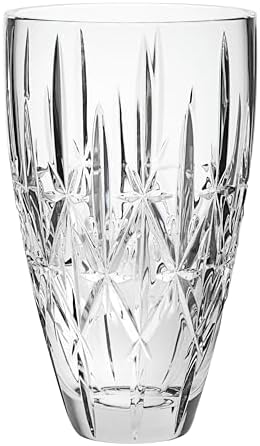
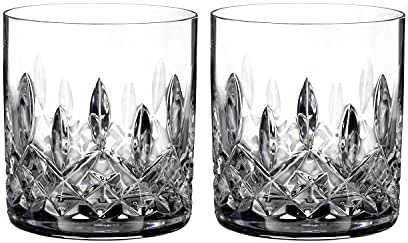
Depending on the era, the etched text reads “Waterford” in script, block lettering, or an Old English–style font, sometimes paired with the seahorse device.
The Seahorse Logo
The seahorse comes from the coat of arms of Waterford, Ireland, and has appeared on the brand’s marks, packaging, and marketing materials at various points since the mid-20th century.
A seahorse etched into the base alongside the “Waterford” name is consistent with a genuine piece. A seahorse alone, with no name, is weaker evidence that some imitators have used similar devices, so don’t treat the logo by itself as conclusive.
Paper and Foil Labels
Older Waterford pieces, especially those made before etching became standard, often carried a gold-and-green paper or foil sticker instead of (or alongside) an etched mark.
A surviving original label is a nice bonus, but labels peel, get lost, and — worse — can be moved from a genuine piece onto a fake one.
Treat a label as supporting evidence next to the etching and the quality of the glass itself, never as proof on its own.
Can You Date Waterford Crystal by Its Mark?
Only loosely, and less precisely than most published guides suggest. Waterford has never released one official chart mapping mark styles to exact years, which is exactly why so many secondhand sources disagree.
Why Published Dating Charts Disagree
Search around, and you’ll find real contradictions. One source states that acid-etched marks were used from 1947 to 1999.
Another says acid etching only began in the 1950s and ran through the 1980s, with the seahorse added separately in the 1990s.
A third claims block-letter marks were used from 1950 to 1999 — then, in a different section of the same article, says pre-1999 pieces carry a Gothic script mark instead.
That’s not three data points. It’s one publisher contradicting its own timeline twice in a single piece. None of this means dating is impossible — it means any specific year range you read online should be treated as a rough estimate, not a fact you can verify a sale price against.
What You Can Say With Confidence
- A gold-and-green paper or foil sticker, with no etched mark, generally points to an earlier piece — likely pre-1950s — though the label alone doesn’t fix an exact year.
- An etched mark reading “Waterford” without a seahorse is consistent with mid-20th-century production, since the seahorse wasn’t part of every era’s mark.
- A seahorse paired with the name points to more recent production, broadly speaking, without pinning down a specific decade.
- Cross-referencing the cut pattern against Waterford’s documented pattern introduction and discontinuation dates — Lismore in 1952, for example — narrows the window further than the mark alone ever will.
How to Tell If a Waterford Mark Is Real
A mark being present, sharp, and legible is not the same as a mark being genuine. For a similar authentication logic applied to a different brand, see our Fiestaware authentication guide.
Signs a Mark May Have Been Added Later
- The mark looks freshly cut or unusually deep compared to the age and wear visible on the rest of the piece.
- The mark sits in an odd location — off-center, on a rim, or somewhere inconsistent with where Waterford typically places it.
- The wording or font doesn’t match any documented Waterford style for the apparent era of the glass.
- The glass itself shows mold seams, a lighter-than-expected weight, or dull, rounded cutting — the hallmarks of pressed imitation glass — despite carrying what looks like a Waterford mark.
Why a “Perfect” Mark Isn’t Automatically Reassuring
Here’s the part most guides skip: fakers add marks specifically because buyers over-trust them.
A crisp, obvious “Waterford” etched into otherwise unremarkable glass, with rounded mold-cuts and no real brilliance, is more suspicious than reassuring.
A genuine faker’s instinct is to compensate for weak glass with a strong mark, not the other way around.
Let the quality and pattern of the crystal justify the mark. If the cutting is dull and the piece is oddly light, a sharp mark doesn’t fix that.
Physical Tests Beyond the Mark
Marks fade, get faked, and sometimes never existed in the first place, which is why weight, sound, and cut quality matter as much as anything etched into the base.
The Weight Test
Genuine Waterford is heavier than ordinary glass of the same size, a direct result of its lead content.
Pick up a piece you’re checking and compare it, by feel, against a similarly sized piece of everyday glassware. A noticeable difference is a good sign, though it’s a comparative test, not a precise one, since piece thickness varies.
The Ring Test
Tap the rim gently with a fingernail or the edge of a spoon. Genuine lead crystal produces a clear, sustained, bell-like tone; ordinary glass tends to sound duller and shorter.
This is one of the more reliable physical tests here, though a chipped or cracked piece, even a genuine one, can dampen the ring enough to give a false negative, so don’t rule out authenticity from a dull tap alone if the piece shows visible damage.
Checking Cut Quality and Clarity
- Look for sharp, deep, precisely cut facets rather than shallow or rounded grooves, since Waterford’s hand-cutting produces noticeably crisper lines than molded imitation glass.
- Check for mold seams running vertically along the piece — true Waterford is blown and cut, not pressed, so seams are a strong sign of an imitation.
- Hold the piece to light and look for a genuine rainbow-prism sparkle rather than a flatter, single-tone reflection.
- Scan the surface for cloudiness or dullness, which shouldn’t appear on a well-cared-for genuine piece regardless of age.
For how these same physical-test limitations play out with a completely different material, see how to identify borosilicate glass.
Is Waterford Crystal Always Full Lead Crystal?
Not necessarily, and that caveat matters more than most identification guides let on.
What “Full Lead Crystal” Actually Means
Full lead crystal traditionally refers to glass containing at least 24% lead oxide by weight, the threshold long used to distinguish true lead crystal from lower-lead “crystalline” glass or ordinary glass marketed loosely as “crystal.”
That lead content is what gives genuine Waterford its weight, its brilliant refraction, and the clear ring covered above.
See whether borosilicate glass counts as crystal for how a completely different material gets marketed with the same “crystal” language.
Why Modern Pieces May Weigh Differently
Recent production has moved toward reduced-lead or lead-free formulations in some lines, driven by regulatory and environmental pressure rather than any change in Waterford’s quality standards.
That means a modern piece can weigh noticeably less than a vintage one of the same size and still be entirely genuine.
If you’re testing weight against an old family heirloom as your reference point, don’t assume a lighter modern purchase is fake; check the era and line before drawing that conclusion.
For a similar lead-content distinction in dinnerware rather than crystal, see lead-safety findings on Corelle Livingware.
What If Your Piece Has No Mark at All?
An unmarked piece isn’t a dead end. It just means the mark isn’t going to do the work for you.
Steps to Verify an Unmarked Piece
- Examine the base under raking light and a loupe one more time — faded marks are often visible only at a specific angle, and it’s easy to miss a partial trace on the first pass.
- Run the weight and ring tests described above, since neither depends on a mark being present.
- Compare the cut pattern against documented Waterford patterns — Lismore’s diamond-and-wedge cuts are the most recognizable reference point, and a close match narrows things down a lot more than the mark alone can.
- Check for mold seams and cutting quality to rule out pressed imitation glass, which is the most common thing mistaken for unmarked Waterford.
- Photograph the base, the cutting, and any partial mark trace before moving to an expert opinion, since a clear photo record helps any appraiser you consult.
When to Get an Expert Opinion
For anything you suspect is old, large, or part of a discontinued pattern, a certified appraiser or an experienced antique glass dealer is worth the cost before you buy, sell, or insure it.
The tests in this guide narrow the range of possibilities; they don’t replace someone who handles Waterford and its imitators regularly and can spot details a written checklist can’t cover.
Check Your Piece Against What You’ve Learned Here
Flip your piece over, check the base under good light, and run the weight and ring tests before you decide anything based on a mark alone or the absence of one.
FAQ
What does the Waterford seahorse logo mean?
It comes from the coat of arms of Waterford, Ireland, and has appeared on the brand’s marks and packaging since the mid-20th century.
Paired with the “Waterford” name, it’s consistent with genuine production, but the seahorse alone isn’t conclusive since imitators have used similar devices.
How can you tell if Waterford crystal is real?
Check the base for an etched mark, run the weight and ring tests, and inspect the cutting for sharp, hand-finished facets rather than rounded mold-cuts. No single test is definitive on its own, so weigh all three together.
Is unmarked Waterford crystal still authentic?
Yes, it can be. Genuine pieces are sometimes unmarked due to factory practices, promotional hand-signing, or simple wear, so unmarked doesn’t mean fake.
Can Waterford crystal marks be faked?
Yes, and a suspiciously crisp, deep mark on otherwise unremarkable glass is actually a warning sign rather than reassurance. Let the quality of the cutting and glass justify the mark, not the other way around.
Is Waterford crystal real lead crystal?
Traditionally, yes, full lead crystal contains at least 24% lead oxide by weight, which gives Waterford its characteristic weight and brilliance.
Some recent production has shifted to reduced-lead or lead-free formulations, so a lighter modern piece isn’t automatically suspect.
Does Waterford crystal ring when tapped?
Yes, genuine lead crystal produces a clear, sustained, bell-like tone when tapped gently on the rim. A chipped or cracked piece can dampen this ring even if it’s authentic, so don’t rule out a genuine piece based on a dull tap alone.
How heavy is real Waterford crystal compared to regular glass?
Noticeably heavier for the same size, due to its lead content. It’s a useful comparative test against a similarly sized piece of ordinary glass, though it isn’t precise enough to rely on by itself.
About the Author & Reviewer
Sarah Emirone, Author
Sarah researches and writes SafeKitchn’s dinnerware and kitchenware guides, with a focus on material safety, lead content, and manufacturer specifications. She cross-references product data sheets, safety certifications, and regulatory filings (including FDA and Prop 65 records) before publishing, and updates articles when new information becomes available.
James Daniels, Reviewer
James reviews SafeKitchn’s material safety content for scientific accuracy. He holds a B.Sc in inorganic chemistry and works as a materials researcher, with particular focus on the composition and safety behavior of glass, ceramic, and metal used in kitchenware.