

Are Pfaltzgraff dishes oven safe? Most of them, yes, but “most” is doing a lot of work in that sentence, and it’s difficult for someone to point out that exception.
Pfaltzgraff’s own care instructions draw a real line: stoneware without metal trim can go in the oven if you heat it gradually, while pieces with gold or platinum accents can’t go in at all.
A second, less obvious line splits the rest: everyday plates and bowls are rated for warming leftovers, while dedicated bakeware — casseroles, bakers, pie plates — gets its own, often higher, temperature rating printed right on the product page.
This article uses Pfaltzgraff’s actual published numbers, not a guessed range, to show you which rule applies to your piece.
Written by Sarah Emirone | Reviewed by James Daniels, B.Sc, Inorganic Chemist & Materials Researcher | Updated September 2026 | See How We Test | Filed under: Buying, Care & Product Guides
Are Pfaltzgraff Dishes Oven Safe?
There’s no Single Answer; It Depends on which Pfaltzgraff You Own.
Yes, for most current Pfaltzgraff stoneware, but three specific things override that yes, and skipping any one of them is how dishes crack.
Material matters, trim matters, and whether the piece is everyday dinnerware or dedicated bakeware matter more than people expect. Get those three right and the oven-safe label on your piece becomes a number you can actually trust, not a guess.
The Three Things That Actually Decide It
Material — stoneware is built to take oven heat better than earthenware, because of how each one is fired (more on that below).
Trim — any piece with metallic accents, including gold or platinum rims, is excluded from oven use entirely, no matter how thick the stoneware underneath is.
Category — everyday dinnerware (plates, bowls, mugs) is rated for warming food that’s already cooked. Dedicated bakeware (casseroles, bakers, pie plates) is rated for actually cooking in, and carries its own published temperature.
Those same three checks apply well beyond this one brand — see the three universal markers of oven-safe dinnerware if you’re sorting through pieces from more than one manufacturer.
Why Every Other Guide Gives You a Different Number
Search this question, and you’ll find one article saying 350°F, another saying 400°F, and another claiming Pfaltzgraff goes up to 500°F. None of them is lying exactly; they’re just averaging across a catalog that doesn’t average.


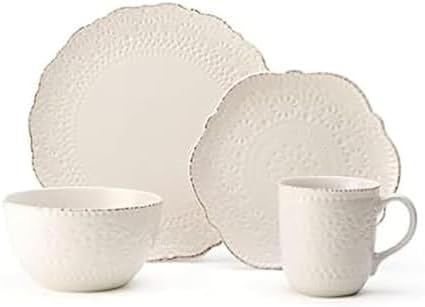
Pfaltzgraff’s own product listings show a Rustic Leaves Covered Casserole rated for 350°F for up to two hours, a Winterberry Rectangular Baker rated for 450°F, and a Square Baker rated for 350°F.
Three real, current products, three different numbers. There is no single “Pfaltzgraff oven-safe temperature” to quote. There’s a published rating per product, and the closer a guide gets to citing one, the less useful its blanket number becomes.
Stoneware vs. Earthenware: Which Material Do You Actually Have
Stoneware is the material you want for oven use, and Pfaltzgraff’s own description of the two explains why. Stoneware is fired above 2200°F, which produces a denser, less porous body that resists chipping and handles heat more evenly.
Earthenware is fired around 2100°F — a hundred degrees lower — which leaves it more porous and more chip-prone.
How to Tell Them Apart
| Trait | Stoneware | Earthenware |
|---|---|---|
| Firing temperature | Above 2200°F | Around 2100°F |
| Density | Denser, less porous | More porous |
| Weight and feel | Thicker, heavier | Lighter |
| Chip resistance | Better | Weaker |
| Oven heat handling | More even, more forgiving | Less forgiving of temperature swings |
Stoneware wins on every measure that matters for oven use, which is why Pfaltzgraff’s current dinnerware lines lean almost entirely toward stoneware.
Why the Firing Temperature Matters for Oven Safety
A higher firing temperature does more than make the clay harder. It vitrifies it, fusing the clay particles into a tighter, glass-like structure that expands and contracts more evenly as the oven heats up.
Earthenware’s lower firing leaves a more open pore structure in the clay body, which is also why Pfaltzgraff’s own instructions warn that earthenware “can become extremely hot” in the microwave and oven alike.
That’s not a defect. It’s a property of the material — and it’s the reason a heavy earthenware pie plate, handling daily oven use the way a stoneware casserole does, is the one more likely to crack first.
The Official Pfaltzgraff Heating Procedure
No, and this is the single most common way Pfaltzgraff dishes break. Pfaltzgraff’s own care page is specific about it: never place cool dinnerware in a preheated oven or directly on a burner, because the rapid temperature jump is what cracks the glaze, not the heat itself.
The Step-by-Step Warming Process
- Start with a cool or room-temperature dish — never one straight from the fridge or freezer.
- Place the dish in a cold oven before turning the oven on, rather than into one that’s already preheated.
- Set the oven to no higher than 225°F for the first 10 minutes, letting the dish warm alongside the air around it.
- After 10 minutes, increase the temperature to whatever the recipe calls for, up to a maximum of 350°F for general dinnerware.
- Use a padded mitt when removing the dish, and set it down on a dry surface — never a wet or cold one.
What Happens If You Skip the Steps
Skip the 225°F step and place a cool dish straight into a 350°F oven, and the outside of the glaze heats faster than the clay body beneath it.
That mismatch is thermal shock, and it’s the direct cause of both glaze crazing and outright cracking — not a slow buildup of wear, but a single rapid event.
Pfaltzgraff’s instructions make the same point in reverse: a hot dish set on a wet countertop or handled with a damp cloth can crack for the identical reason, just running the temperature gap the other way.
Dinnerware vs. Dedicated Bakeware — Different Rules Apply
Yes, but a casserole dish and a dinner plate are rated for two different jobs, and treating them the same is where a lot of confusion in this exact search comes from.
Everyday dinnerware is built and marketed for warming food that’s already cooked. Dedicated bakeware is built and marketed for actually cooking in, and it’s the only category that comes with a specific published temperature.
Everyday Plates and Bowls (Warming Only)
- Standard dinner plates, salad plates, bowls, and mugs are typically listed as microwave and dishwasher safe, often without a separate oven rating at all — the Village 16-piece set is a current example.
- These pieces are designed for reheating food that’s already cooked at a low, gradual temperature, not for active baking or roasting.
- If a product listing doesn’t mention an oven-safe rating, the safer assumption is that the piece is meant for warming only.
- The step-down procedure above still applies to warming, since the same thermal-shock risk exists at lower temperatures too.
It’s the same warming-versus-baking line you’ll find in how IKEA draws the same warming-versus-baking line for its own stoneware range.
Casseroles, Bakers, and Pie Plates (Actual Baking)
| Product | Material | Oven-safe rating |
|---|---|---|
| Rustic Leaves Covered Casserole | Stoneware, reactive glaze | 350°F, up to 2 hours |
| Winterberry Rectangular Baker | Stoneware | 450°F |
| Square Baker (oven-to-table) | Stoneware | 350°F |
These three are all current, all stoneware, and all carry a different number. That’s proof that “Pfaltzgraff’s oven-safe temperature” isn’t one figure to memorize — it’s a rating to check per product, every time.
What’s Never Oven Safe, Regardless of Material
No. Pfaltzgraff is direct about this one: dinnerware with precious metal accents is excluded from oven use entirely, regardless of whether the body underneath is stoneware or earthenware.
Metal trim doesn’t fail gracefully in heat; it can scorch, discolor, or, in microwave use, spark.
Patterns and Pieces to Keep Out of the Oven
- Any pattern with a gold, platinum, or silver rim or accent is off-limits for both the oven and the microwave.
- Decorative serving pieces explicitly marketed as display-only, rather than oven-to-table, should stay out regardless of material.
- Pieces with visible cracks, chips, or damaged glaze should be retired from oven use, since damage is exactly where thermal stress concentrates first.
- Non-ceramic Pfaltzgraff products, like melamine or glass accessories, follow entirely different rules and shouldn’t be assumed safe by default.
Metal trim isn’t the only popular dinnerware feature that rules out the oven entirely; wheat straw plates, which carry the same oven restriction, are worth knowing about if your kitchen mixes materials.
Broiler and Stovetop Are a Hard No
Pfaltzgraff dinnerware and stoneware should never go under a broiler or on a stovetop burner, and the reason is the same one driving every rule above: direct, concentrated heat creates a temperature gradient across the dish that an oven’s ambient heat doesn’t.
An oven heats a dish relatively evenly from all sides.
A broiler element or a gas burner heats one spot intensely while the rest of the dish stays cool — and that gradient is exactly the kind of stress stoneware and earthenware aren’t built to absorb.
Vintage Pfaltzgraff vs. Current Production
Less predictably than current pieces, and the reason traces back to a specific year.
Pfaltzgraff was made in York County, Pennsylvania, from 1811 until 2005, when Lifetime Brands acquired the company, closed the Pennsylvania factory, and moved production to China and, for some patterns, Indonesia.
Vintage and current Pfaltzgraff are not the same physical product, even under an identical pattern name.
What Changed in 2005
Lifetime Brands completed its acquisition of The Pfaltzgraff Co. in July 2005, when the original company had annual sales of roughly $148 million and a 200-year manufacturing history in Pennsylvania.
The factory closed, and current Pfaltzgraff dinnerware now ships with “Made in China” or “Made in Indonesia” markings instead — buyers checking the backstamp on patterns like Winterberry have confirmed Indonesia specifically.
That move changed more than the address on the box. Multiple buyers have reported quality issues tied to specific current patterns: widespread crazing on the Tea Rose pattern, and Winterberry plates cracking within months of regular use, complaints that aren’t showing up at the same rate on pre-2005, Pennsylvania-made pieces of the same age.
It’s the same vintage-versus-current split we found in Fire King glassware, where a brand name stayed constant while the manufacturing behind it changed completely.
Crazing and What It Means for Oven Use
Crazing is a network of fine cracks in the glaze layer, not the clay body underneath, and it usually comes from a mismatch between how much the glaze and the clay expand when heated.
It’s not automatically dangerous; a crazed plate isn’t leaching anything just because the lines are visible, but it is a warning sign for two different things.
Structurally, a crazed piece is more likely to fail under the next thermal shock, since the glaze has already shown it can’t absorb the stress evenly.
And on older pieces specifically, visible crazing is worth pairing with a closer look at lead content, since pre-1970s glazes predate the FDA’s leachable-lead limits.
For the full breakdown of where Pfaltzgraff’s lead risk actually sits by era, see Pfaltzgraff’s full lead and cadmium safety results.
Quick verdict:
- Reheating leftovers on a plate or bowl — any current stoneware piece without metal trim, following the 225°F step-down.
- Actually baking or roasting — check the specific product’s published rating first; don’t assume 350°F applies to a piece rated for 450°F, or vice versa.
- Using a vintage or inherited piece — inspect for crazing and metal trim before it goes anywhere near oven heat, and treat pre-1970s pieces with extra caution.
FAQ
Are Pfaltzgraff dishes oven safe?
Most current stoneware pieces without metal trim are, as long as you heat them gradually rather than placing them in an already-hot oven.
Dedicated bakeware carries its own specific temperature rating that can run higher than general dinnerware. Always check the product listing for the exact number rather than assuming one blanket figure.
What temperature can Pfaltzgraff go in the oven?
It varies by product — Pfaltzgraff’s own listings show ratings from 350°F up to 450°F depending on the piece. General dinnerware should start at 225°F for 10 minutes before increasing, with 350°F as the usual ceiling unless the specific product says otherwise.
Can you put Pfaltzgraff dishes in the oven straight from the fridge?
No. A cold dish placed directly into a hot oven creates the rapid temperature change that causes cracking and crazing. Start with a room-temperature piece in a cold oven, then heat gradually.
Is Pfaltzgraff dinnerware with gold trim oven safe?
No. Pfaltzgraff explicitly excludes pieces with precious metal accents from oven use, regardless of the material underneath. The same exclusion applies to microwave use.
Is the vintage Pfaltzgraff oven safe?
It’s less predictable than current production, since pre-2005 pieces were made in Pennsylvania under different clay and glaze formulations than today’s China- and Indonesia-made stoneware. Inspect older pieces for crazing or damage before using them in the oven.
Is crazed Pfaltzgraff dinnerware safe to use?
Crazing itself is a glaze-level cosmetic issue, not automatically a safety hazard. It does signal a piece more prone to cracking under the next thermal shock, and on older pieces, it’s worth checking lead content as well.
Can Pfaltzgraff go under the broiler?
No. Broilers and stovetop burners create concentrated, uneven heat that stoneware and earthenware aren’t built to handle, unlike an oven’s more even ambient heat.
Is Pfaltzgraff microwave-safe the same way it’s oven-safe?
Mostly, with the same exceptions, pieces with metallic trim are excluded from both. Earthenware can get extremely hot in the microwave, even when it’s technically rated safe, so a potholder is worth using either way.
About the Author & Reviewer
Sarah Emirone, Author
Sarah researches and writes SafeKitchn’s dinnerware and kitchenware guides, with a focus on material safety, lead content, and manufacturer specifications. She cross-references product data sheets, safety certifications, and regulatory filings (including FDA and Prop 65 records) before publishing, and updates articles when new information becomes available.
James Daniels, Reviewer
James reviews SafeKitchn’s material safety content for scientific accuracy. He holds a B.Sc in inorganic chemistry and works as a materials researcher, with particular focus on the composition and safety behavior of glass, ceramic, and metal used in kitchenware.