If you’ve ever shopped for Corelle dishes, you’ve probably come across two terms that seem confusing — Corelle Vitrelle vs Livingware.
Corelle is a well-known dinnerware brand trusted by millions for making lightweight, durable dishes that hold up to daily family use.
The confusion is understandable because both terms get thrown around interchangeably, even though they mean very different things.
One refers to the glass material technology behind the dishes, and the other is a product collection name. This guide breaks it all down clearly so you know exactly what you’re looking at before you buy.
What Is Corelle Vitrelle?
Definition of Vitrelle Glass Technology
Corelle Vitrelle is the name of the proprietary glass material used to manufacture Corelle dishes. It’s a triple-layer tempered glass — three thin layers of glass bonded together under heat and pressure.
This laminated tempered glass construction is what makes Corelle dishes so uniquely thin yet strong.
The technology was developed specifically to give glass dinnerware a level of durability that regular glassware simply can’t match, all while keeping the material food safe and free of BPA, lead, and cadmium.
Why Vitrelle Is Lightweight
The reason Corelle dishes feel almost surprisingly light in your hand comes down to the Vitrelle glass manufacturing process. Instead of using a thick single slab of glass like traditional glass dinnerware, Vitrelle bonds three ultra-thin layers together.
The result is a lightweight tableware option that’s easier to carry, easier to stack, and far more practical for everyday household use. For people who cook frequently or serve large meals, that reduced handling strain makes a real difference.
Core Features of Vitrelle Dinnerware
Beyond being lightweight, Vitrelle glass delivers solid chip resistance and impressive stackability.
The tempered glass surface resists chipping along edges, one of the most common problems with ceramic dishes, and the thin, uniform profile of the plates and bowls allows them to stack compactly without taking up much cabinet space.
The non-porous glass surface also resists staining and odors, which is a genuine hygiene advantage over porous ceramic materials.
What Is Corelle Livingware?
Overview of the Livingware Collection
Corelle Livingware is a specific product line — a collection of everyday dinnerware sold under the Corelle brand. It’s not a material or a technology.
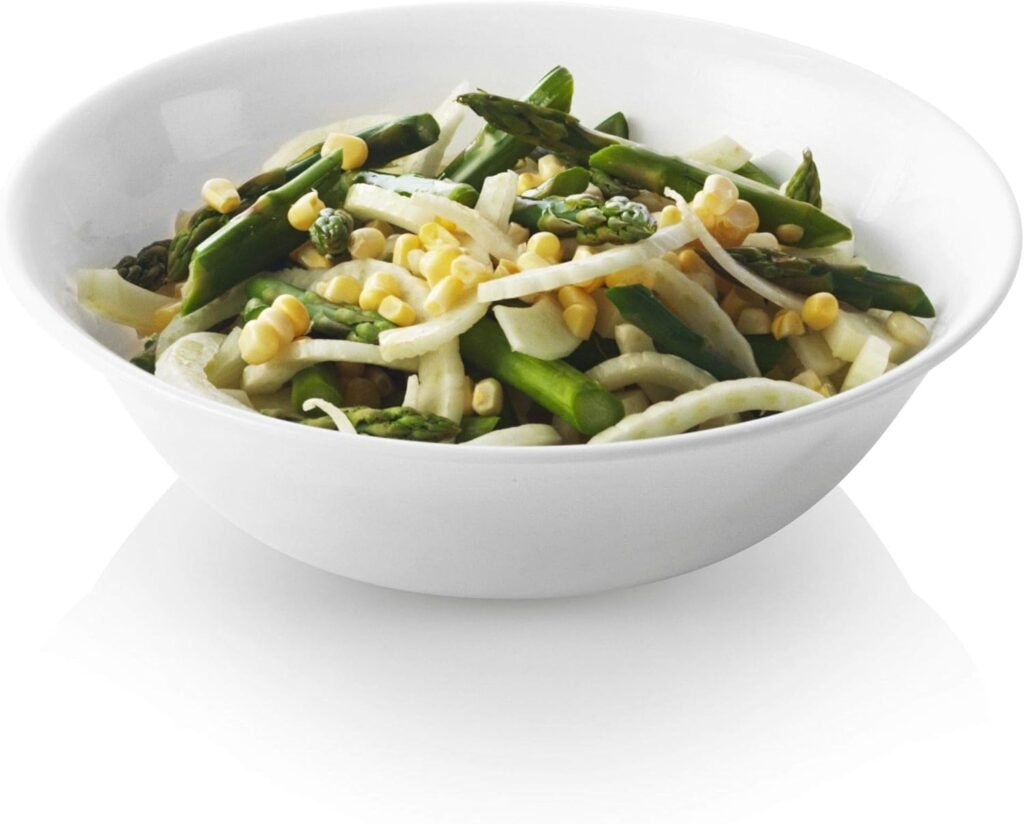
Think of it as a category of dishes within Corelle’s broader product catalog, designed specifically for casual daily dining at home.
The Livingware collection includes dinner plates, salad plates, soup bowls, cereal bowls, and, in many cases, coordinated mugs and serving pieces as part of a complete place setting.
Design Philosophy Behind Livingware
The design thinking behind Livingware is simple: functional, everyday tableware that works for the whole family without fuss. The collection leans into casual dining rather than formal settings.
You’ll find a range of styles — classic white dinnerware with clean lines for a minimalist look, as well as patterned dinnerware options featuring floral patterns, geometric patterns, and decorative rims that add personality to the table without being overpowering.
Relationship Between Livingware and Vitrelle
Here’s where it clicks into place. Livingware dishes are manufactured using Vitrelle glass. So when you buy a Corelle Livingware set, you’re getting products made from Vitrelle material.
Vitrelle is the “how they’re made” — the glass technology. Livingware is the “what you’re buying” — the product collection. They aren’t competing options; they’re two different layers of the same product story.
Material Comparison
Vitrelle Glass Construction
Vitrelle is a laminated tempered glass material built from three bonded layers. That triple-layer glass structure is engineered to distribute impact force rather than concentrating it at a single point, which is why these dishes resist breakage better than standard glass.
The thermal shock resistance of tempered glass also means the material handles reasonable temperature transitions without cracking — useful for dishes moving between the microwave and a cold table surface.
Livingware Material Composition
Because Livingware is a Corelle product line and not a separate material, its composition is simply Vitrelle glass. The distinction matters when you’re comparing Corelle collections against each other.
Some higher-end Corelle lines may have slightly different design finishes or decorative rim treatments, but the core Vitrelle glass construction remains consistent across most collections, including Livingware.
Structural and Design Differences of Corelle Vitrelle vs Livingware
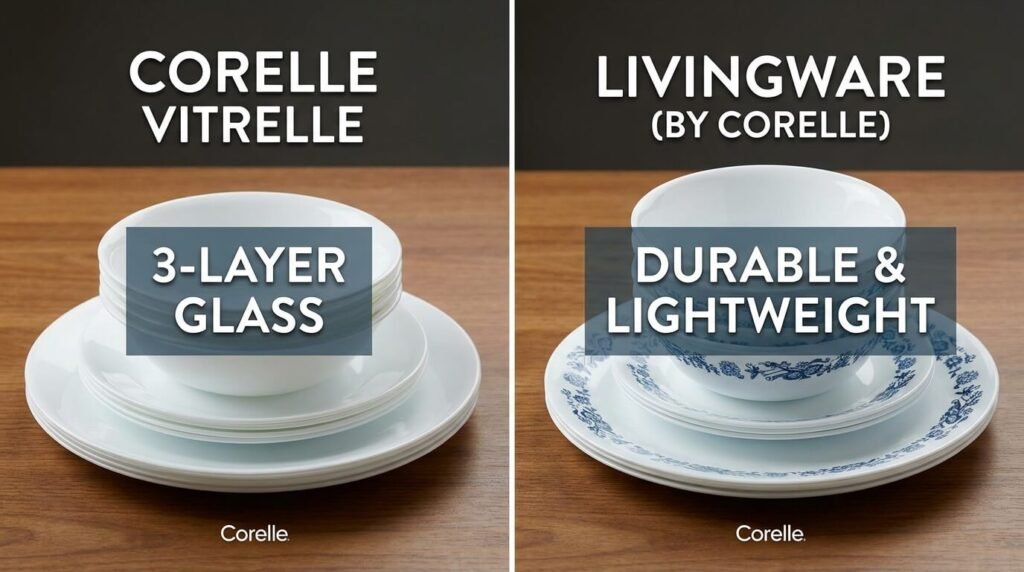
The real structural difference to understand is that Vitrelle is a material technology, and Livingware is a product collection.
They’re not two competing materials or two different builds of the same dish. If someone tells you “Vitrelle is better than Livingware,” they’re comparing apples to oranges.
The more accurate conversation is about which Corelle collection suits your style and storage needs, and for that, check out this Corelle dinnerware comprehensive guide for a fuller breakdown of all Corelle product lines.
Design and Appearance Comparison
Vitrelle’s Thin and Sleek Look
One of the first things people notice about Vitrelle-based dishes is how thin and sleek they look.
The minimalist design profile comes naturally from the manufacturing process because the triple-layer glass is so dense and strong at a thin gauge; there’s no need to bulk up the edges for added strength as you’d see with earthenware or heavier ceramic plates.
The result is a clean, modern look that fits well in contemporary kitchens.
Livingware’s Casual Everyday Designs
Corelle Livingware dishes are styled for real, everyday household aesthetics rather than showpiece dining.
The designs are approachable and practical, meant to look good on your table without demanding special care.
Whether you go with a plain white gloss finish or one of the patterned versions, the Livingware collection is built around functional household aesthetics that work for weeknight dinners just as well as weekend family gatherings.
Pattern and Collection Variety
Livingware offers a solid range of decorative options. Plain classic white is always available, ideal for those who prefer color coordination flexibility, while the patterned options cover a range of tastes from simple geometric patterns to more traditional floral pattern designs.
The colorfast finish on printed Livingware pieces is designed to maintain color over years of dishwasher use, though it’s worth noting that the decorative rim can show surface wear over time with very heavy use.
Durability Comparison
Chip Resistance
Chip resistance is one of Vitrelle’s strongest selling points. The tempered glass construction means the edges of Corelle dishes hold up significantly better than ceramic or earthenware alternatives.
That said, no dinnerware is completely chip-proof, and Corelle dishes can still chip if dropped directly onto a hard floor from a height. For typical daily kitchen handling, though, the chip resistance is noticeably better than most comparable options.
Breakage Resistance
Break resistance is where the picture gets a bit more nuanced. Vitrelle glass does withstand impact durability well under normal use conditions, and it’s far more resistant to casual drops and knocks than regular glass.
However, when Corelle dishes do break under severe impact, they tend to shatter into more pieces than ceramic. It’s worth keeping this in mind if you have young children at the table, even though everyday household handling rarely triggers this outcome.
Surface Scratch Resistance
The glass surface preserves its finish well against normal utensil wear, but it’s not entirely scratch-proof.
Metal utensils used repeatedly over the surface can leave light marks over time, and stacking dishes without care can also contribute to surface scratches on the gloss finish.
Avoiding abrasive cleaning tools like steel wool goes a long way toward keeping the surface looking good longer.
Weight and Handling Comparison
Lightweight Nature of Vitrelle
Corelle consistently sits at the lighter end of the dinnerware spectrum thanks to Vitrelle glass.
A standard Corelle dinner plate weighs considerably less than a comparable ceramic or stoneware plate, which makes a genuine difference when you’re carrying a full stack of dishes from the cabinet to the table.
The lightweight tableware design also reduces the risk of dishes being dropped simply due to handling fatigue.
Everyday Handling of Livingware
For daily family use, the Livingware collection’s lightweight makes it particularly practical.
Carrying a bowl of soup one-handed, clearing the table quickly, or loading and unloading the dishwasher all feel easier when the dishes themselves aren’t adding unnecessary weight to the equation. It’s a small thing individually, but across years of daily use, it adds up.
Best for Elderly Users and Children
The lightweight nature of Corelle dinnerware makes it especially well-suited as child-friendly dinnerware and as elderly-friendly dinnerware.
For seniors dealing with reduced grip strength or arthritis, lighter plates and bowls reduce handling strain considerably. For children learning to carry their own dishes, the lighter weight means fewer accidents and more independence at the table.
Storage and Space Efficiency
Thin Stackability of Vitrelle
The stackability of Vitrelle-based dishes is one of the more underrated practical benefits of Corelle products.
Because the plates are uniformly thin and stack evenly, you can fit significantly more dishes in a standard kitchen cabinet compared to bulkier ceramic or stoneware options.
If you’ve ever struggled to fit a full set of dishes into a crowded cabinet, this difference is immediately noticeable.
Livingware’s Space-Saving Benefits
Corelle Livingware takes full advantage of this space-saving design. A complete set of Livingware dishes — plates, salad plates, and bowls — takes up a fraction of the cabinet space that a comparable ceramic set would need.
This matters especially in homes where kitchen cabinet storage is limited or already well-used for other purposes.
Best for Small Kitchens and Apartments
For apartment living specifically, Corelle Livingware is a practical go-to. The compact footprint in storage, combined with the lightweight handling, makes it easy to maintain a full dinnerware set without sacrificing valuable cabinet real estate.
It’s also a popular choice for RV dining setups for the same reason — lightweight, stackable, and durable enough for life on the road.
Everyday Use Comparison
Best for Daily Family Meals
For busy households where dishes go through heavy rotation, breakfast, lunch, and dinner every single day, the lightweight durability of Corelle Livingware holds up well over time.
The dishes resist chipping from daily handling, tolerate the dishwasher without degrading, and don’t require babying between uses. That combination of durability and ease is exactly what everyday dinnerware should deliver for family dining.
Best for Casual Dining
Corelle Livingware was designed with casual dining firmly in mind. It doesn’t try to be formal or precious; it’s built to support the kind of meals most families actually eat most days.
The design options are varied enough to suit different tastes, while the practical features keep things simple for whoever ends up washing up afterward.
Best for RVs and Compact Living
If you’re outfitting an RV or a small apartment kitchen, Corelle’s lightweight portability is hard to beat.
The dishes stack tightly, resist breakage better than standard glass during travel, and are dishwasher safe, which matters when you’re working with limited space and limited time for cleanup.
It’s one of the reasons Corelle has a loyal following among travelers and compact living enthusiasts.
Microwave and Dishwasher Safety
Microwave Compatibility
Corelle Vitrelle dishes are microwave safe, which makes reheating leftovers or warming food directly on the plate a straightforward option.
The tempered glass construction withstands microwave heat without warping, leaching chemicals, or degrading over time.
It’s worth noting that dishes should not be used in a conventional oven at high temperatures; microwave use is fine, but extreme oven heat is a different story.
Dishwasher Cleaning Convenience
All Corelle Livingware dishes are dishwasher safe, and the non-porous glass surface actually handles repeated machine washing very well.
Unlike some printed ceramic dishes that fade after years in the dishwasher, the colorfast finish on Livingware patterns is designed to hold up through regular washing cycles.
Avoiding high-heat drying settings is a reasonable precaution for maintaining the decorative finish over the long term.
Resistance to Stains and Odors
The non-porous surface of Vitrelle glass is a genuine hygiene advantage. Because the glass doesn’t absorb liquids, it also doesn’t trap odors from strongly flavored foods like tomato sauce, curry, or coffee.
Stain resistance is similarly strong the surface prevents stains from setting in the way they can with porous ceramic materials. This keeps the dishes looking cleaner for longer with standard washing.
Maintenance and Care Comparison
Cleaning Requirements
Keeping Corelle dishes clean is about as straightforward as it gets. The smooth, easy-to-clean glass surface doesn’t require soaking or scrubbing.
Regular dishwasher cycles or hand washing with warm soapy water handle everyday food residue without any special effort. The non-porous construction means food doesn’t bond to the surface the way it can with rougher materials.
Preventing Surface Scratches
To keep the surface looking its best, it helps to avoid stacking metal pans or rough-bottomed items directly on top of Corelle dishes.
Using plate separators or soft cloths between stacked dishes is a simple way to prevent surface scratches from stacking friction.
Metal utensils are fine for eating, but sawing back and forth on the plate surface repeatedly over the years can leave visible marks.
Avoiding Thermal Shock
While Vitrelle tempered glass handles temperature transitions better than standard glass, it still makes sense to avoid dramatic temperature shifts.
Going directly from a freezer to a hot microwave or placing a cold dish on an extremely hot surface puts stress on any glass material.
Letting dishes come closer to room temperature before a significant temperature change is a simple precaution that extends product longevity.
“Livingware Is Heavier Than Vitrelle”
Some people assume Livingware must be heavier or thicker because it’s described as an “everyday” collection, but that’s not the case.
Livingware dishes are made from Vitrelle glass, so they share the same lightweight profile. Design variations exist across Corelle’s catalog, but Livingware isn’t a heavier or sturdier version; it’s the same material in a casually styled product line.
“All Corelle Products Are Identical”
Corelle makes multiple collections, and while they all use Vitrelle glass technology, they differ in design styling, pattern options, and intended aesthetic.
Livingware is positioned as casual everyday dinnerware. Other Corelle lines may feature different decorative approaches or more contemporary styling.
For a direct comparison between specific collections, see this article on Corelle Vitrelle vs Winter Frost, which digs into those differences in more detail.
Which Is Better for Different Households?
Best for Busy Families
For households with kids, regular cooking, and high dish turnover, Corelle Livingware is a strong choice.
The lightweight and durable construction handles daily use without demanding careful handling.
Chip resistance keeps dishes looking decent even through a few accidental drops, and the dishwasher-safe design means cleanup doesn’t require extra effort or thought.
Best for Minimalist Kitchens
If your kitchen aesthetic leans clean and simple, Corelle’s plain white Livingware options deliver that minimalist dinnerware look without cluttering the visual space.
The thin profile and compact stackability also align well with a minimalist storage philosophy, keeping only what’s needed and making it easy to store.
Best for Everyday Casual Dining
Livingware is essentially designed for this exact use case.
If you eat most of your meals at home in a casual setting, family dinners, breakfast at the kitchen table, weekend lunches, Livingware’s practical design and durable build make it a sensible everyday tableware choice that works without you having to think about it.
Conclusion
When it comes to Corelle Vitrelle vs Livingware, the key takeaway is straightforward: Vitrelle is the glass material technology, and Livingware is the product collection made from it.
Both are associated with the same core strengths: lightweight durability, compact stackability, and reliable everyday practicality. The Vitrelle glass construction gives Livingware dishes their chip resistance, non-porous hygiene benefits, and ease of handling.
Your best choice depends on design preference, household storage space, and how you use dishes day to day. Match the product to your lifestyle, and Corelle will likely serve you well for years to come.