

You’ve bought beautiful dinnerware, treated it carefully, and still watched it chip, crack, or fade after just a few months of everyday use.
You’ve replaced sets more times than you’d like to admit, each time hoping the next one lasts and each time disappointed. Your table deserves better, and so does your budget.
Buying thicker, heavier plates isn’t the answer; investing in dinnerware engineered to outlast everything else in your kitchen is.
This post breaks down everything about the Corelle dinnerware set, the unique three-layer Vitrelle glass material that makes it virtually chip-resistant, lightweight, and surprisingly durable for everyday American home use.
Here’s what most people don’t know: your dinnerware isn’t breaking because you’re careless, it’s breaking because it was never built to last in the first place.
Written by Sarah Emirone | Reviewed by James Daniels, B.Sc, Inorganic Chemist & Materials Researcher | Updated September 2026 | See How We Test | Filed under: Buying, Care & Product Guides
What Is Corelle Dinnerware?
Overview of the Corelle Brand
Corelle has been around since 1970 and was originally developed by Corning Inc., the same company behind Pyrex.
It quickly built a following for producing dishes that could take the punishment of daily family dining without chipping or cracking as fast as traditional ceramic options.
Today, the brand is owned by Corelle Brands (now part of Instant Brands), and it remains one of the most recognized names in everyday tableware. You’ll find its products in millions of homes across North America, and for good reason.
What Makes Corelle Different?
The biggest differentiator is the material. While most dinnerware relies on ceramic, stoneware, or porcelain, Corelle uses a proprietary glass technology called Vitrelle.
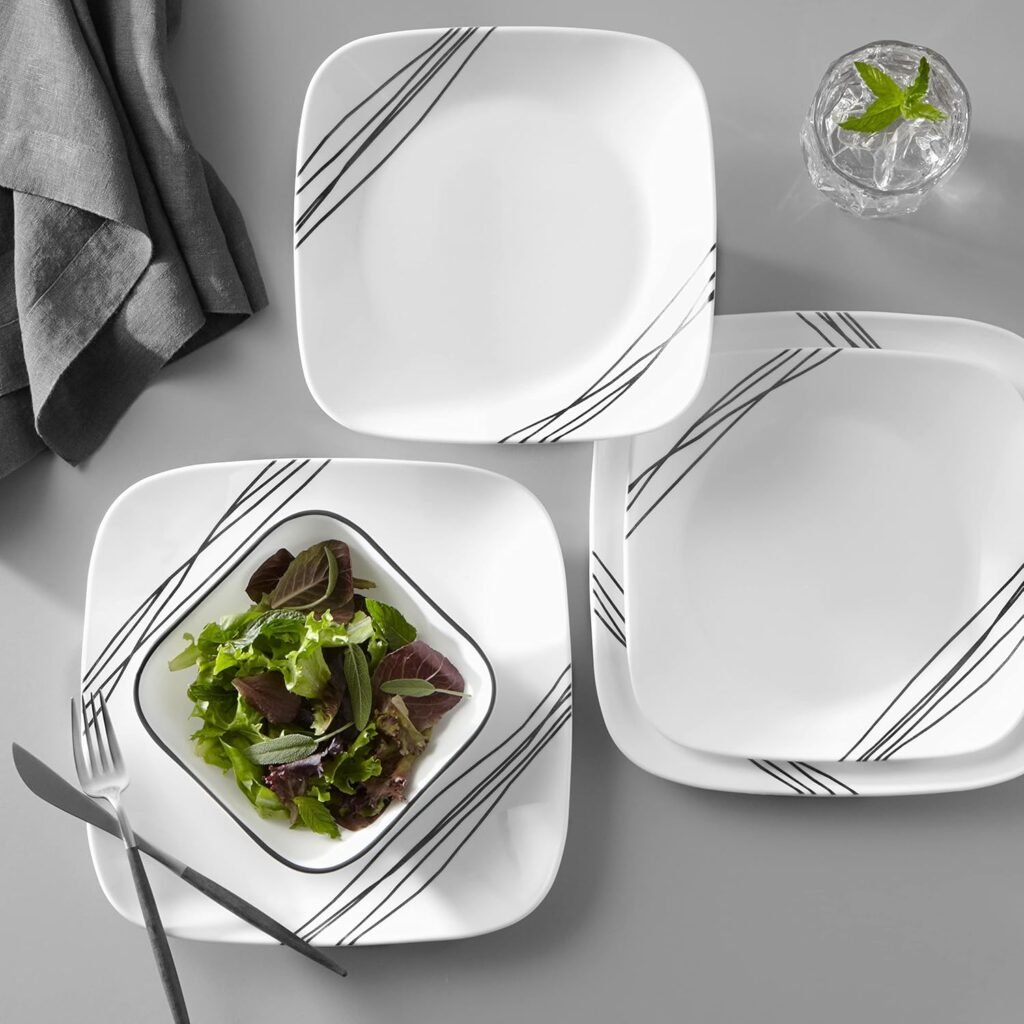
This makes the dishes noticeably thinner and lighter than what you’d expect from a durable plate. The lightweight dinnerware design is especially noticeable when you’re unloading the dishwasher or setting a full table; it just feels less cumbersome.
And despite being thin, the dishes don’t feel fragile. That combination of lightness and strength is what keeps people coming back.
Corelle’s Everyday Use Reputation
Corelle has built its identity around being practical for modern households. It’s the kind of dinnerware that doesn’t demand delicate handling.
You can stack it, toss it in the dishwasher, reheat leftovers in the microwave, and put it away without overthinking it. Families with kids appreciate how manageable the plates are, and apartment dwellers love how little space they take up in the cabinet.
For everyday casual dining, very few brands match Corelle’s combination of convenience and durability.
What Is Corelle Dinnerware Made Of?
Vitrelle Glass Technology
Corelle dishes are made from Vitrelle glass, a triple-layer laminated glass developed specifically for dinnerware.
Unlike standard glass, Vitrelle bonds three layers together under pressure and heat, which dramatically improves its chip resistance and break resistance compared to single-layer materials.
It’s not the same glass you’d find in a window or a drinking cup. The material was engineered specifically for the demands of everyday meals, and it shows in how the dishes perform over time.
Why Corelle Is Lightweight
The thinness of Vitrelle glass is what makes Corelle so light. Traditional ceramic dinnerware needs significant thickness to hold its structural integrity — Vitrelle doesn’t.
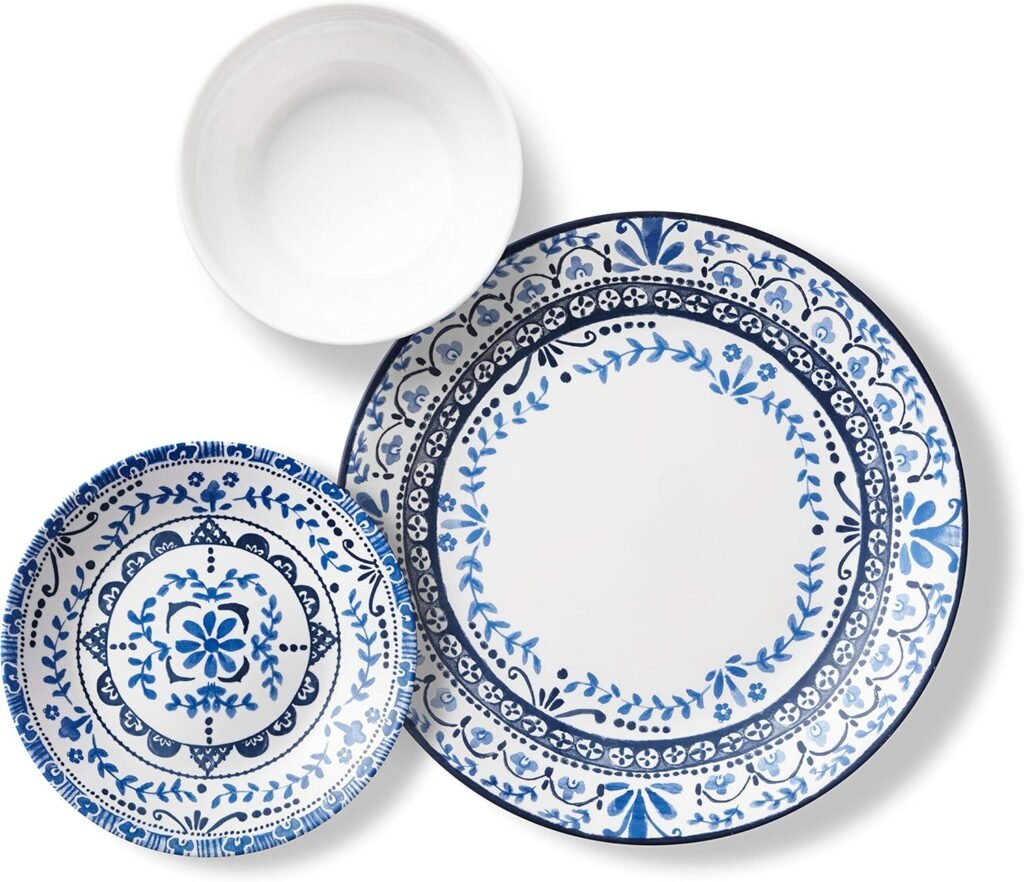
Because the three layers fuse into a rigid composite, the overall plate can be much thinner without sacrificing strength. That’s how Corelle manages to produce a dinner plate that weighs a fraction of what a comparable stoneware plate would.
For anyone dealing with wrist strain, kids helping set the table, or limited grip strength, that difference is genuinely meaningful.
How Tempered Glass Improves Durability
The tempered glass structure is key to Corelle’s durability story. Tempering is a heat treatment process that compresses the outer surfaces of the glass while putting the interior under tension.
This improves strength significantly compared to untreated glass. As a result, Corelle plates resist chipping along the edges where most ceramic plates take damage first.
They also handle thermal shock better than you might expect, though extreme temperature changes should still be avoided. The result is dinnerware that genuinely holds up to the rigors of everyday family dining.
Types of Corelle Dinnerware Sets
Everyday Dinnerware Sets
The core of Corelle’s lineup is built around everyday dinnerware, straightforward sets that include standard dinner plates, smaller plates, and bowls for daily meals.
These sets are available in service for four, six, or eight, making them easy to match to your household size.
Most everyday sets stick to simple designs: solid white or lightly decorated patterns that don’t feel too precious to actually use on a Tuesday night.
Casual Dining Collections
Beyond the basics, Corelle offers casual dining collections with decorative designs, think patterned dinnerware with floral patterns, botanical prints, and nature-inspired motifs.
These sets bring a bit of personality to the table without crossing into formal territory. They work well for households that want something that feels a little curated without buying expensive fine china that only comes out twice a year.
Minimalist and Modern Collections
For anyone drawn to a cleaner aesthetic, Corelle’s minimalist dinnerware and modern dinnerware lines deliver exactly that.
Classic white dinnerware remains its most popular look; it pairs with almost any kitchen or dining style, from Scandinavian design to a modern kitchen setup.
Some collections incorporate subtle geometric patterns or muted color palettes that hold up visually without demanding attention.
These sets are particularly popular with people who care about home decor coordination and want their dishes to disappear into the overall look of the table.
Family-Sized Dinnerware Sets
Larger households or those who entertain regularly can opt for service for six or service for eight configurations. These sets give you enough place settings to host a dinner without scrambling to supplement from mismatched extras.
Some family-sized bundles also include a serving bowl or serving platter, which rounds out the full table setting without additional purchases.
What Comes in a Corelle Dinnerware Set?
Dinner Plates
The dinner plate is the centerpiece of any Corelle set. Standard Corelle dinner plates measure around 10.25 inches — large enough for a full main meal without being oversized.
Because of the Vitrelle construction, they’re significantly lighter than an equivalent ceramic dinner plate, which makes a real difference when loading or unloading the dishwasher multiple times a week.
Salad Plates
Most Corelle sets include salad plates — smaller plates typically around 8.5 inches — that work for appetizers, side dishes, desserts, or kids’ portions.
They stack neatly with the dinner plates and don’t take up much extra cabinet room. For households that eat in courses or just want a second plate size available, they’re a practical addition.
Soup and Cereal Bowls
Bowl sets in Corelle typically cover two main formats: the soup bowl for liquid-heavy dishes, and the cereal bowl for breakfast use or lighter snacks.
Both are made from the same Vitrelle glass, so they’re microwave safe and dishwasher safe, which matters for the morning routine as much as for dinner cleanup.
Some sets include deeper bowls suitable for serving soups and stews, while others come with wider, shallower styles better suited for cereal or pasta.
Mugs and Drinkware
Certain Corelle sets and bundles include a mug set for a coordinated beverage experience.
Corelle mugs are made to complement the dinnerware visually while sharing the same practical benefits: microwave safe, dishwasher safe, and available in matching patterns or solid white.
They’re not always included in base sets, so it’s worth checking what’s in the box before purchasing if you want the full matched table setting.
Benefits of Corelle Dinnerware
Lightweight Design
This is the feature most people notice first. Picking up a Corelle plate for the first time, especially if you’re used to ceramic or stoneware, is a bit of a surprise.
The lightweight dinnerware design isn’t just a convenience; it’s a practical advantage for households with older family members, young children, or anyone who finds heavy dishes cumbersome.
It also reduces handling strain when you’re stacking and unstacking dishes on a daily basis.
Chip and Crack Resistance
Chip resistance is one of Corelle’s core selling points, and it’s backed by the Vitrelle glass technology. While no dish is completely indestructible, Corelle plates hold up far better along the edges than most ceramic dinnerware of a similar price.
They don’t chip as easily from the bumps and scrapes of everyday kitchen use, dropped forks, stacked plates, and sink collisions. Break resistance is also improved compared to standard glass, though direct hard drops on tile will still break it.
Space-Saving Storage
Stackability is a genuine advantage here. Because Corelle plates are thin and uniformly shaped, they nest tightly in a stack that takes up far less cabinet space than an equivalent set of stoneware or porcelain.
For apartment living, RVs, or anyone working with limited kitchen cabinet storage, that space-saving is meaningful. You can fit an entire service for four in the space a typical ceramic set of four might use.
Easy Cleaning and Maintenance
The non-porous surface of Vitrelle glass means food and stains don’t penetrate the material. That translates to better stain resistance — tomato sauces, coffee, and other pigmented foods wipe or wash away more easily than they would from a porous ceramic surface.
The smooth finish also resists odor absorption, which is a hygiene advantage over time. And since Corelle is dishwasher safe, everyday cleaning doesn’t require any special effort.
Is Corelle Safe to Use?
Microwave Safety
Corelle dinnerware is microwave safe, which is one of the key reasons it works so well for everyday household use. You can move leftovers from the fridge to the microwave oven without transferring to a separate container.
One important note: Corelle dishes with metallic decorations or trim should not go in the microwave; always check the label on your specific set.
Standard Vitrelle plates and bowls without metallic accents are fully suitable for reheating food.
Dishwasher Safety
All standard Corelle dishes are dishwasher safe, which keeps maintenance simple. The non-porous surface holds up through repeated dishwasher cycles without degrading or absorbing detergent residue.
For best results, use a mild detergent and avoid high-heat dry cycles over long periods, as sustained high heat can gradually affect the decorative designs on patterned sets.
Food Safety and Non-Porous Surface
Corelle dinnerware is BPA-free and made from food-safe material that meets FDA compliance standards.
The non-porous surface of Vitrelle glass means it doesn’t absorb food residue, bacteria, or moisture, making it a more hygienic surface than many porous ceramic alternatives.
For those researching safety specifics, you can read our complete guide on whether Corelle plates are BPA-free.
Additionally, Corelle is produced without lead or cadmium in its glazing, which aligns with both FDA standards and broader consumer safety expectations. If lead content in dishware is a concern for your household, you can read more about Corelle dishes with lead.
Heat Resistance
Corelle handles normal kitchen temperatures well. Dishes can go from the refrigerator or freezer to the microwave without issue, and they’re oven safe up to 350°F (175°C) for conventional ovens.
However, thermal shock resistance has limits; placing a frozen Corelle dish directly into a very hot oven or pouring boiling liquid into a cold dish is not recommended. Gradual temperature transitions are always safer with any glass-based dinnerware.
RELATED: WAS CORELLE DINNERWARE RECALLED?
Corelle vs Other Dinnerware Materials
Corelle vs Stoneware
Stoneware is denser and heavier than Vitrelle glass, which gives it a satisfying, substantial feel — but that weight adds up fast when you’re dealing with a full set of dishes.
Stoneware does retain heat better than Corelle, which is a plus for serving warm food at the table. But Corelle wins on chip resistance, lightweight handling, and stackability.
For everyday casual dining, Corelle is more practical; stoneware suits a rustic table setting aesthetic where the heft is part of the appeal.
Read our guide on the difference between Corelle Stoneware vs Vitrelle.
Corelle vs Porcelain
Porcelain dinnerware is elegant and typically thinner than stoneware, but it’s more prone to chipping than Corelle.
High-quality porcelain can be expensive, and even mid-range porcelain sets chip along the edges more quickly than Vitrelle glass under normal use conditions.
Corelle offers a similar thinness without the same fragility at the edges, and at a significantly lower price point. If you’re weighing formal dinnerware against everyday practicality, that trade-off matters.
Corelle vs Ceramic Dinnerware
Traditional ceramic dinnerware is the most common alternative to Corelle, and the comparison comes down to weight, durability, and price.
Ceramic dishes are typically heavier, more porous, and more prone to chipping than Corelle. They can absorb stains and odors over time, which is a meaningful hygiene consideration.
Corelle’s Vitrelle glass outperforms standard ceramic on almost every practical measure for everyday use while remaining comparable in price.
Corelle vs Melamine
Melamine dinnerware is virtually shatter-proof and very lightweight, which makes it popular for outdoor dining and households with young children.
The critical difference is that microwave-safe melamine dinnerware is not safe for microwave use, while Corelle is. If reheating in the microwave is part of your daily routine, melamine creates more inconvenience than it solves.
Corelle gives you most of the durability benefits of melamine without the microwave restriction. Also worth noting: melamine is a plastic-based material, while Corelle’s glass construction is generally considered more food safe.
For an in-depth study, read our guide on the difference between Corelle and Melamine dinnerware.
Best Corelle Dinnerware Sets for Different Needs
Best for Everyday Family Use
For households juggling kids, daily cooking, and frequent dishwasher runs, a service for six or service for eight set in one of Corelle’s classic white or lightly patterned designs is the practical choice.
Look for sets with both dinner plates and bowls included, and check that the pattern is a standard line rather than a limited edition. That way, you can replace individual pieces if needed.
Best for Small Apartments
Apartment living calls for space-saving solutions, and Corelle’s stackable profile is one of the best in this category. A service for four in a clean white or minimalist design gives you enough pieces without overwhelming a small kitchen cabinet.
The lightweight design also makes handling dishes in a compact kitchen easier. Sets that include both plates and bowls in a single purchase keep the investment manageable.
Best for RV and Travel Use
RV owners and travelers need dishes that are lightweight, compact, and durable enough to survive transport.
Corelle checks all three boxes. The plates stack tightly, the Vitrelle glass resists the minor bumps and vibrations of travel better than ceramic, and the microwave-safe design works with RV microwaves.
Many RV-focused buyers opt for a smaller service for four sets to minimize storage footprint. See our guide on Corelle for RV and camping.
Best for Modern Dining Tables
For anyone who wants their dishware to contribute to a modern kitchen aesthetic, Corelle’s classic white dinnerware or collections with subtle geometric patterns work well.
The clean lines and neutral color palette pair naturally with contemporary tableware styling without requiring the investment of porcelain dinnerware or fine china.
For a side-by-side comparison with a popular alternative, you can also check out Corelle vs Mikasa to see how they stack up on design and value.
How to Choose the Right Corelle Dinnerware Set
Based on Household Size
Start with the number of place settings you actually need. A service for four works for couples or small households; service for six suits most families; service for eight is better if you entertain regularly or have a larger household.
It’s worth buying slightly more than you think you need, in case dishes get broken, and having extras means you’re not immediately running short.
Based on Dining Style
Think about how you actually use dishes day to day. If you’re doing casual dining most nights with the occasional hosted dinner, a versatile white or lightly patterned set covers both without looking out of place.
If your table setting leans more formal, look at Corelle’s decorative collections; they still offer the same practical advantages while presenting better for guests.
Based on Kitchen Storage Space
If storage is limited, stackability should be a top consideration. Corelle’s thin profile means a full set takes up very little vertical space in kitchen cabinet storage.
That said, some of the deeper bowl styles stack less efficiently than the shallower options worth checking dimensions if your cabinet height is restricted.
Based on Design Preference
Corelle offers both patterned dinnerware and minimalist styles, so there’s genuine choice here. If your kitchen has a strong visual identity, bold colors, rustic materials, Scandinavian design, a plain white set tends to harmonize better than a busy floral pattern.
If you want the dishes to be part of the decor, the decorative collections are worth browsing. Either way, sticking with a standard pattern rather than a seasonal collection makes it easier to replace pieces over time.
Common Problems and Limitations of Corelle
Can Corelle Break?
Yes — Corelle can break, particularly from direct impact drops onto hard surfaces like tile or concrete. The Vitrelle glass construction resists chipping and minor impacts extremely well, but it’s not unbreakable.
When Corelle does break, it tends to shatter into larger pieces rather than fragmenting into tiny shards, which is actually a safety advantage compared to some other glass types.
The break resistance is genuinely better than ceramic, but drop a plate onto a tile floor from counter height, and it can still break.
For further understanding of Corelle’s chip and break ability, read our guide on: ” Why does Corelle explode?
Scratches and Utensil Marks
One common complaint with Corelle — especially on white dishes — is gray or silver utensil marks left by knives and forks. These aren’t actually scratches in the glass surface; they’re metal deposits from the cutlery transferred onto the plate.
The good news is they’re usually removable with a mild abrasive cleaner like Bar Keepers Friend. Scratch resistance on the glass surface itself is actually quite good, but the appearance of metal transfer marks can be alarming if you’re not expecting it.
Design Fading
Over many years of dishwasher use, decorative designs on Corelle dishes can gradually fade. This is more common with older sets or if high-heat dishwasher cycles are used repeatedly.
Plain white Corelle sets don’t have this issue since there’s no decoration to degrade. For patterned sets, handwashing occasionally and avoiding harsh dishwasher settings will extend the life of the design.
How to Care for Corelle Dinnerware
Proper Cleaning Techniques
Corelle is dishwasher safe, and for most households, that’s all the care guidance needed. Use standard dishwasher detergent and a normal cycle.
For handwashing, warm water and a soft cloth or non-abrasive sponge work perfectly. If metal utensil marks appear, apply a small amount of Bar Keepers Friend with a damp cloth, rub gently, and rinse. The marks should lift without damaging the surface.
Safe Storage Practices
Stack Corelle plates and bowls in your kitchen cabinet as you normally would. Because of the stackability design and the chip resistance of Vitrelle glass, stacking doesn’t cause the edge chipping you’d see with more fragile ceramic dishes.
Avoid stacking heavy items on top of Corelle dishes, and keep them away from areas where they could be knocked off a counter or shelf.
Avoiding Thermal Shock
Thermal shock resistance in Vitrelle glass is better than that of standard glass, but it still has limits.
Don’t take a dish directly from the freezer and place it on a hot burner, and don’t pour boiling water into a room-temperature Corelle bowl.
Let dishes adjust to temperature gradually. For oven use, Corelle is safe up to 350°F — going above that, or using the broiler, is not recommended.
Common Buying Mistakes to Avoid
Choosing Based Only on Design
It’s easy to pick a dinnerware set because it looks good in the product photo, but design should be secondary to function.
Think about whether the dinnerware material suits your daily habits — microwave use, dishwasher frequency, storage constraints.
A beautiful patterned set that can’t go in the microwave or takes up too much cabinet space will frustrate you quickly, regardless of how attractive it is.
Buying Too Few Place Settings
One of the most common mistakes is underestimating how many pieces you actually need. A service for four might seem enough for a couple, but factor in hosting guests, dishes in the dishwasher, or the occasional breakage.
Buying a service for six from the start is often the smarter move, and it’s usually more cost-effective per piece than buying a smaller set and adding to it later.
Ignoring Microwave and Dishwasher Needs
Your lifestyle should drive your purchasing decision. If you microwave meals daily, make sure the set you choose is microwave-safe and double-check that it doesn’t have metallic decorations that would disqualify it.
If dishwasher convenience is important, confirm the set is rated dishwasher safe. Corelle handles both well, but it’s worth confirming for any specific set you’re considering rather than assuming.
Who Should Buy Corelle Dinnerware?
Families With Children
Corelle’s lightweight design and chip resistance make it a natural fit for households with kids.
Lighter dishes are easier for children to handle, and the improved break resistance means a bumped counter or fumbled dish is less likely to result in a broken plate.
The dishwasher-safe design also simplifies cleanup after the inevitable food messes.
Apartment and Condo Owners
Anyone living with limited kitchen storage will appreciate Corelle’s space-saving profile. The thin, stackable plates and bowls allow you to store a complete dinner set in the space other brands might use for half as many pieces.
That’s a practical advantage in any compact living situation, whether it’s a city apartment, a condo, or a smaller home.
RV Owners and Travelers
Lightweight dinnerware that can handle movement and vibration without chipping is exactly what RV owners need.
Corelle’s Vitrelle glass holds up well to the conditions of travel dining, and the compact stackability keeps storage organized in limited RV cabinet space.
The microwave-safe design also works with standard RV kitchen setups.
Minimalist Kitchen Enthusiasts
For those who prefer a clean, uncluttered kitchen aesthetic, Corelle’s classic white dinnerware and modern collections fit naturally into minimalist interiors.
The neutral color palette and simple profile don’t compete visually with the rest of the kitchen, and the practical benefits mean you’re not sacrificing function for form.
If you’ve been looking for a dish set that handles well and disappears into the background, this is a strong candidate.
You might also find it useful to compare options. Our guide on the difference between Corelle and FiestaWare breaks down how these two popular brands compare on style, material, and everyday usability.
Conclusion
Corelle dinnerware sets have held their place as a household staple because they genuinely solve the problems that matter in day-to-day dining.
The lightweight design, chip resistance, stackability, and microwave and dishwasher compatibility aren’t marketing language; they’re features you notice every single day.
Whether you’re outfitting a first apartment, feeding a growing family, or traveling in an RV, there’s a Corelle set that fits the situation.
Choose based on your household size, dining habits, and storage reality, and you’ll end up with dishes that earn their space in the cabinet for years.
About the Author & Reviewer
Sarah Emirone, Author
Sarah researches and writes SafeKitchn’s dinnerware and kitchenware guides, with a focus on material safety, lead content, and manufacturer specifications. She cross-references product data sheets, safety certifications, and regulatory filings (including FDA and Prop 65 records) before publishing, and updates articles when new information becomes available.
James Daniels, Reviewer
James reviews SafeKitchn’s material safety content for scientific accuracy. He holds a B.Sc in inorganic chemistry and works as a materials researcher, with particular focus on the composition and safety behavior of glass, ceramic, and metal used in kitchenware.